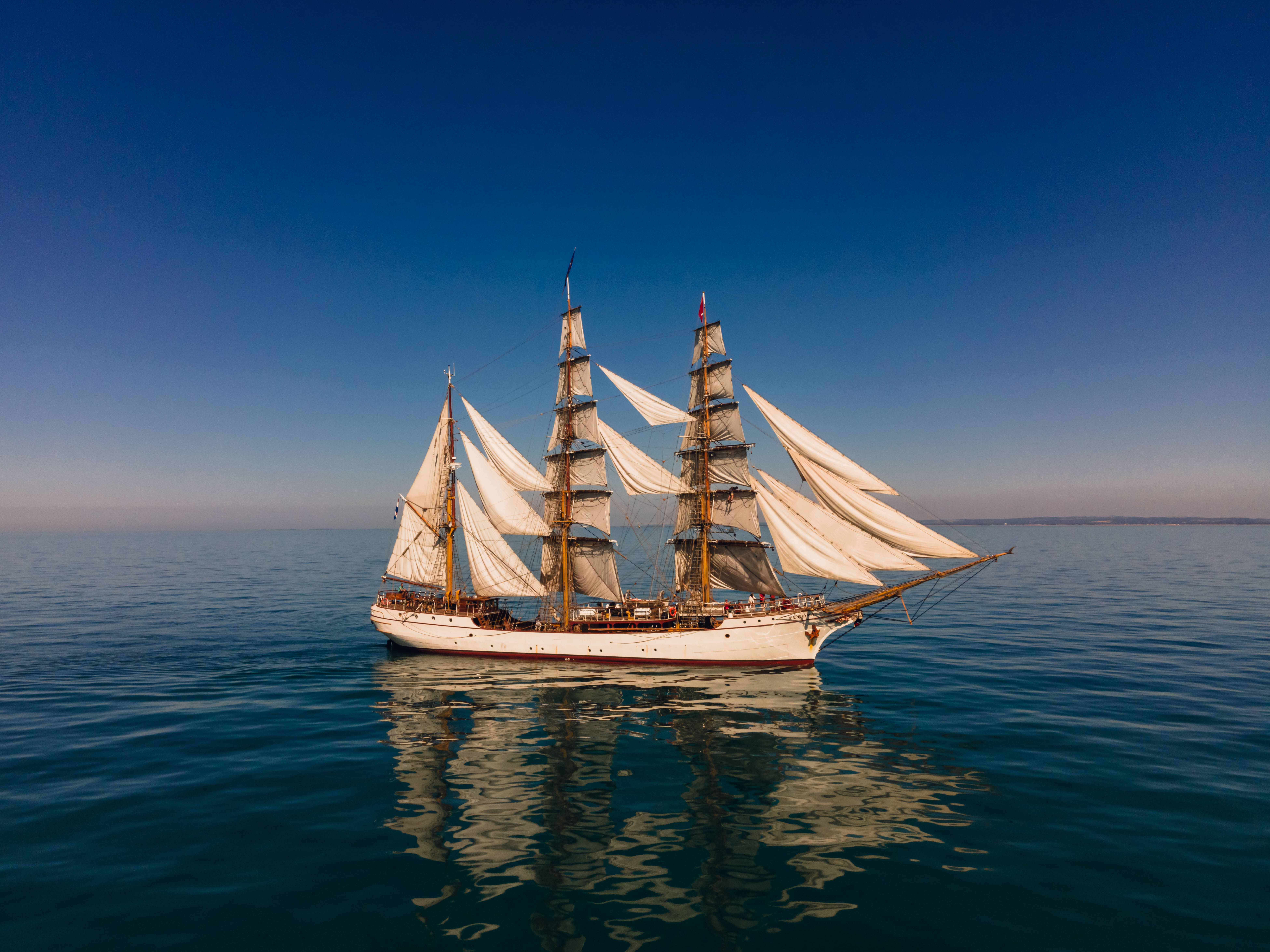
Cross the
Pacific
Under Sail
Galápagos · Rapa Nui · Pitcairn · Fakarava · Tahiti
Cook Islands · Tonga · New Zealand · Cape Horn
A series of hands-on ocean voyages on board the tall ship EUROPA.
The ocean
between the
islands.
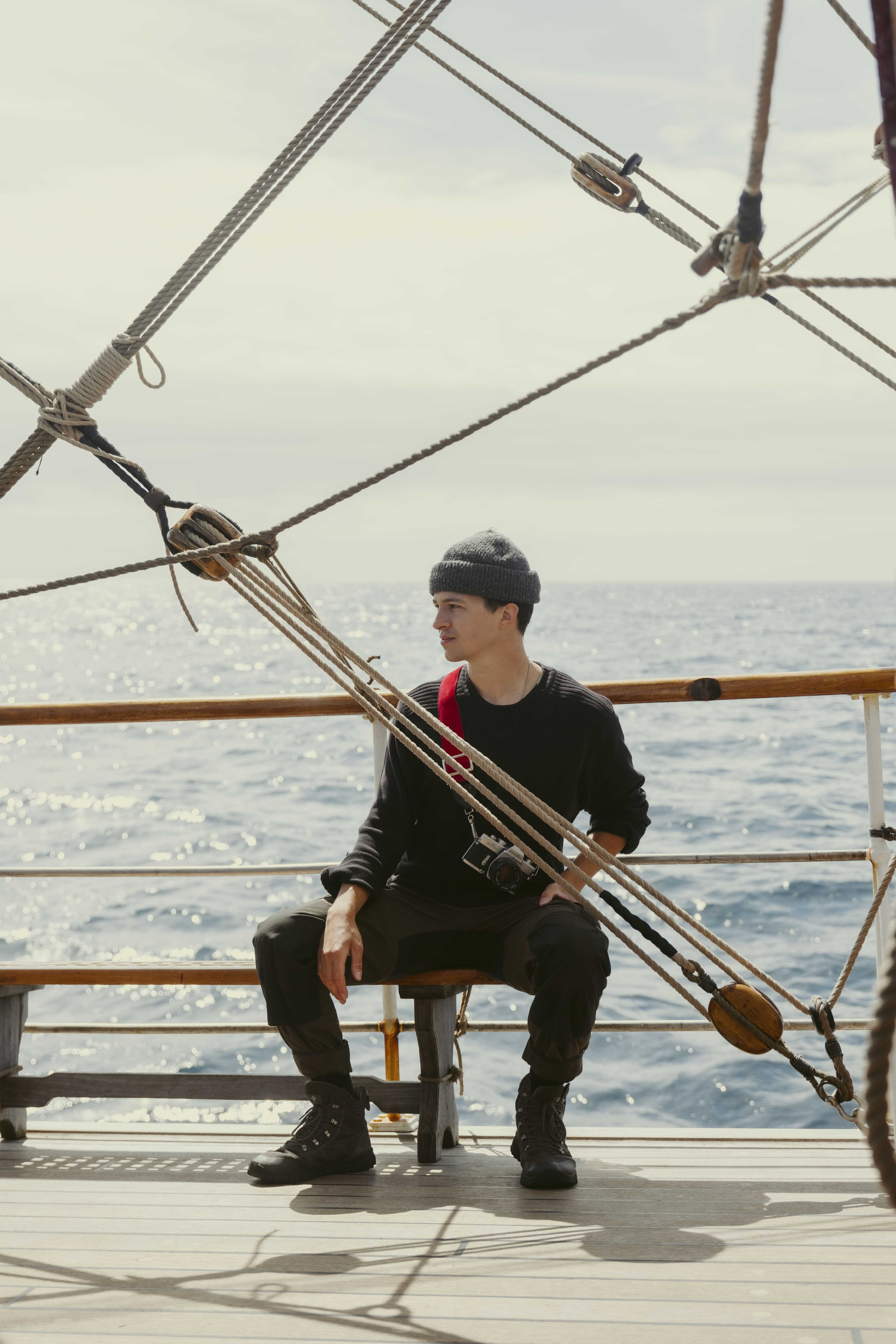
Across the Pacific, the distance between islands is part of the experience. On Bark EUROPA, you do not simply travel from one destination to the next. You sail the ocean between them — as part of the voyage crew.
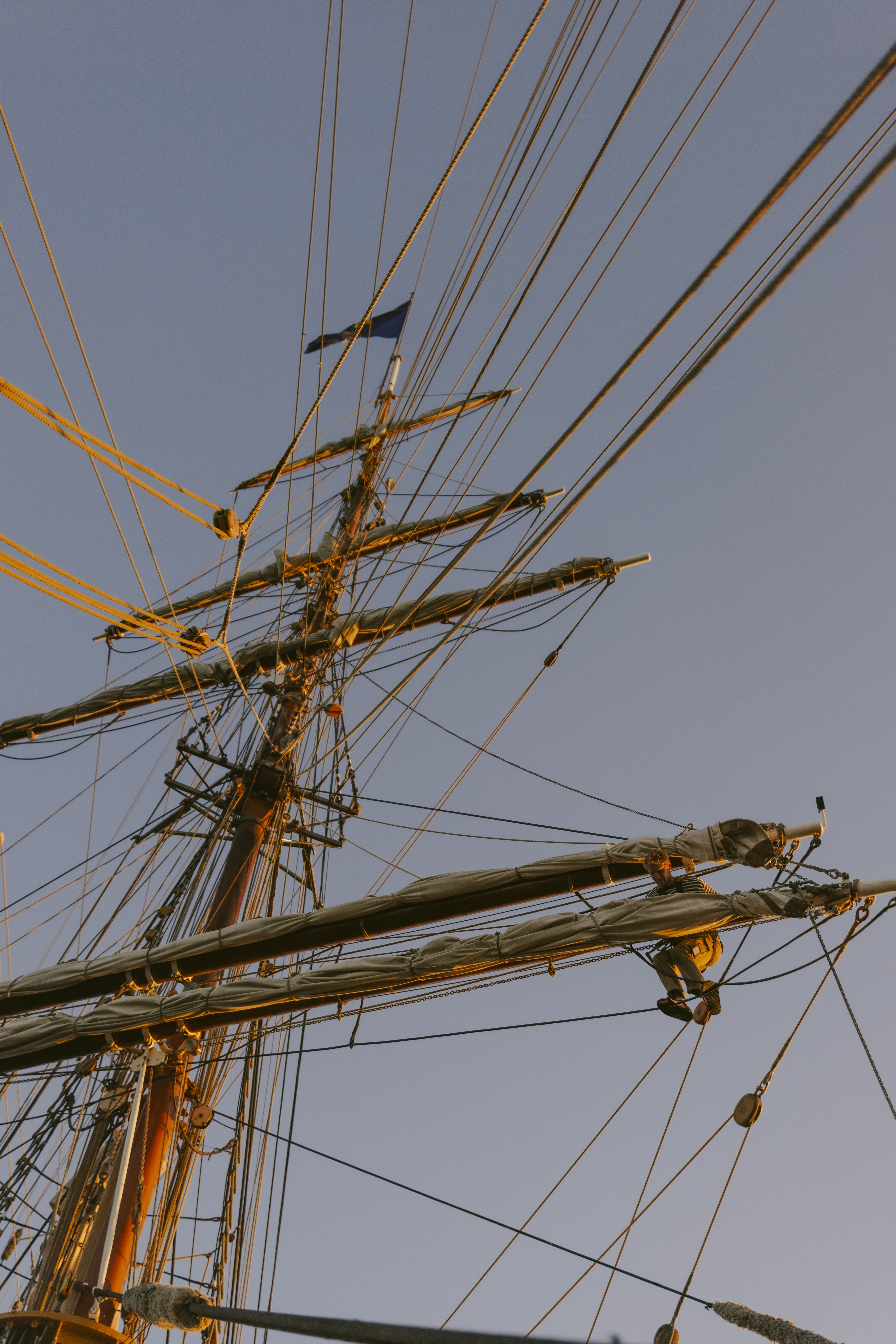
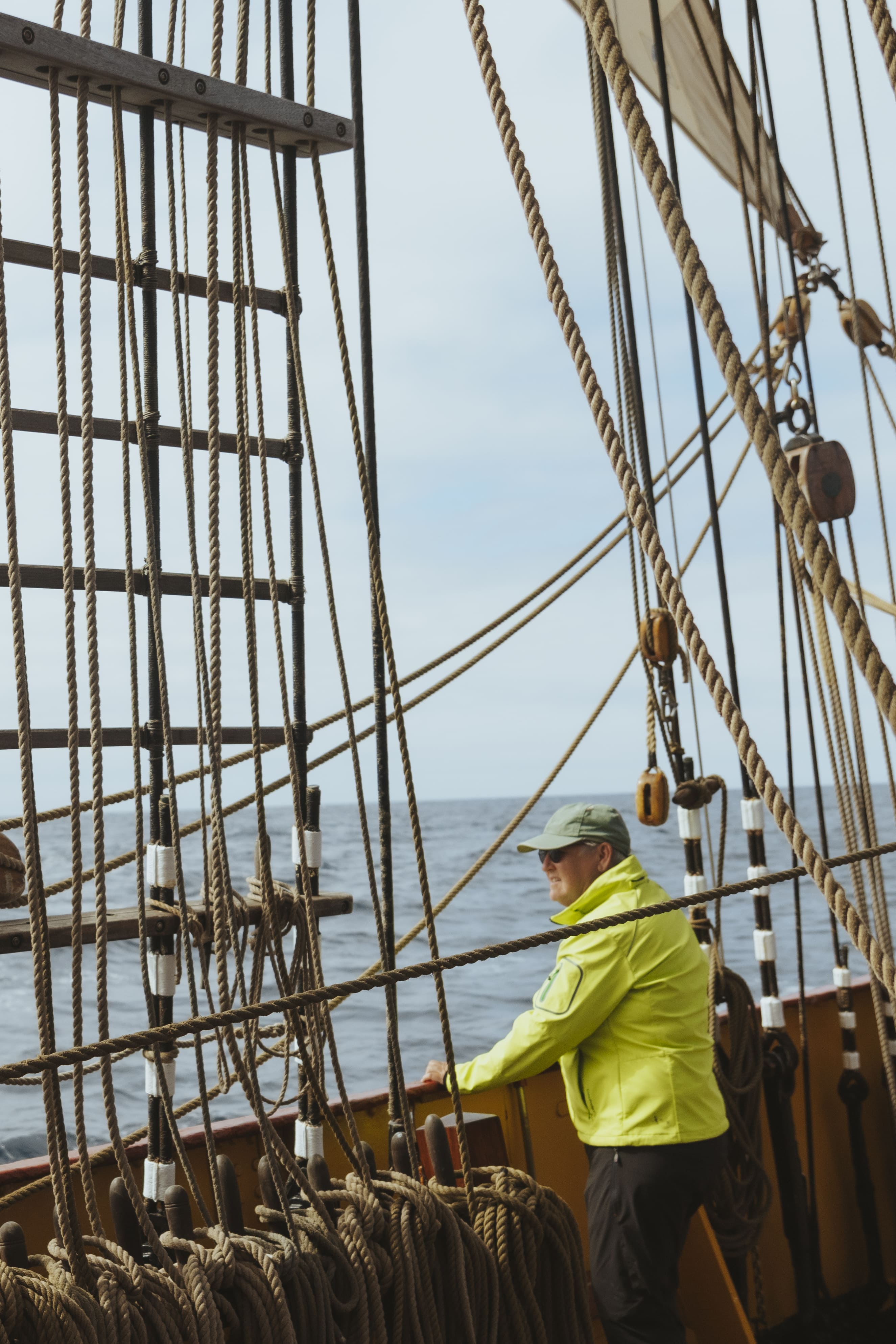
This means standing watch, taking the helm, keeping lookout, and handling sail. It means living by the rhythm of wind and weather, eating meals in a deckhouse that pitches and rolls, and sleeping in a bunk you earn every night. It means arriving at Rapa Nui after three weeks at sea and understanding what that arrival means.
The Pacific crossing follows a route shaped by traditional square-rig sailing and favourable ocean winds. Europa carries up to 42 voyage crew, never more. The ship is small. The ocean is not.
No prior sailing experience is required. What is required is physical fitness, a willingness to participate, and a genuine readiness to be at sea for weeks at a time with no internet and no mobile signal.
If that sounds like the kind of travel you have been looking for, read on.
Five Pacific voyages.
One Cape Horn Rounding.
Five hands-on Pacific voyages carry EUROPA from Callao to Auckland. From there, the route continues into the ultimate sailor's challenge: a non-stop Cape Horn rounding to Ushuaia. Click any voyage below for the full itinerary.
Route schematic, not to scale. Landings and route details remain subject to weather, ocean conditions, and local clearance.
Five Pacific voyages.
One Cape Horn Rounding.
Click any voyage name below to view the full itinerary, inclusions, and booking information on barkeuropa.com.
| Voyage | Dates | Days | Nm | From (4/6p cabin) |
|---|---|---|---|---|
|
Callao → Galápagos
Callao, Peru → Santa Cruz, Galápagos
|
4 Jun – 21 Jun 2026 |
18 | 1,030 | €6,480 |
|
Galápagos → Easter Island
Santa Cruz, Galápagos → Hanga Roa, Rapa Nui
|
23 Jun – 20 Jul 2026 |
28 | 1,940 | €7,980 |
|
Easter Island → Tahiti
Hanga Roa, Rapa Nui → Papeete, French Polynesia
|
22 Jul – 22 Aug 2026 |
33 | 2,560 | €7,920 |
|
Tahiti → Cook Islands
Papeete, French Polynesia → Rarotonga, Cook Islands
|
24 Aug – 11 Sep 2026 |
19 | 830 | €5,415 |
|
Cook Islands → Auckland
Rarotonga, Cook Islands → Auckland, Aotearoa NZ
|
13 Sep – 9 Oct 2026 |
26 | 1,950 | €6,240 |
|
Auckland → Cape Horn → Ushuaia
Auckland, NZ → Ushuaia, Argentina · Non-stop
|
11 Oct – 1 Dec 2026 |
52 | 5,800 | €8,875 (18–34) €9,880 (35+) |
Request an option →
Not a
cruise.
An active
sailing
voyage.
When you board Bark EUROPA, you do not become a passenger. You become part of the voyage crew. That changes what the experience is.
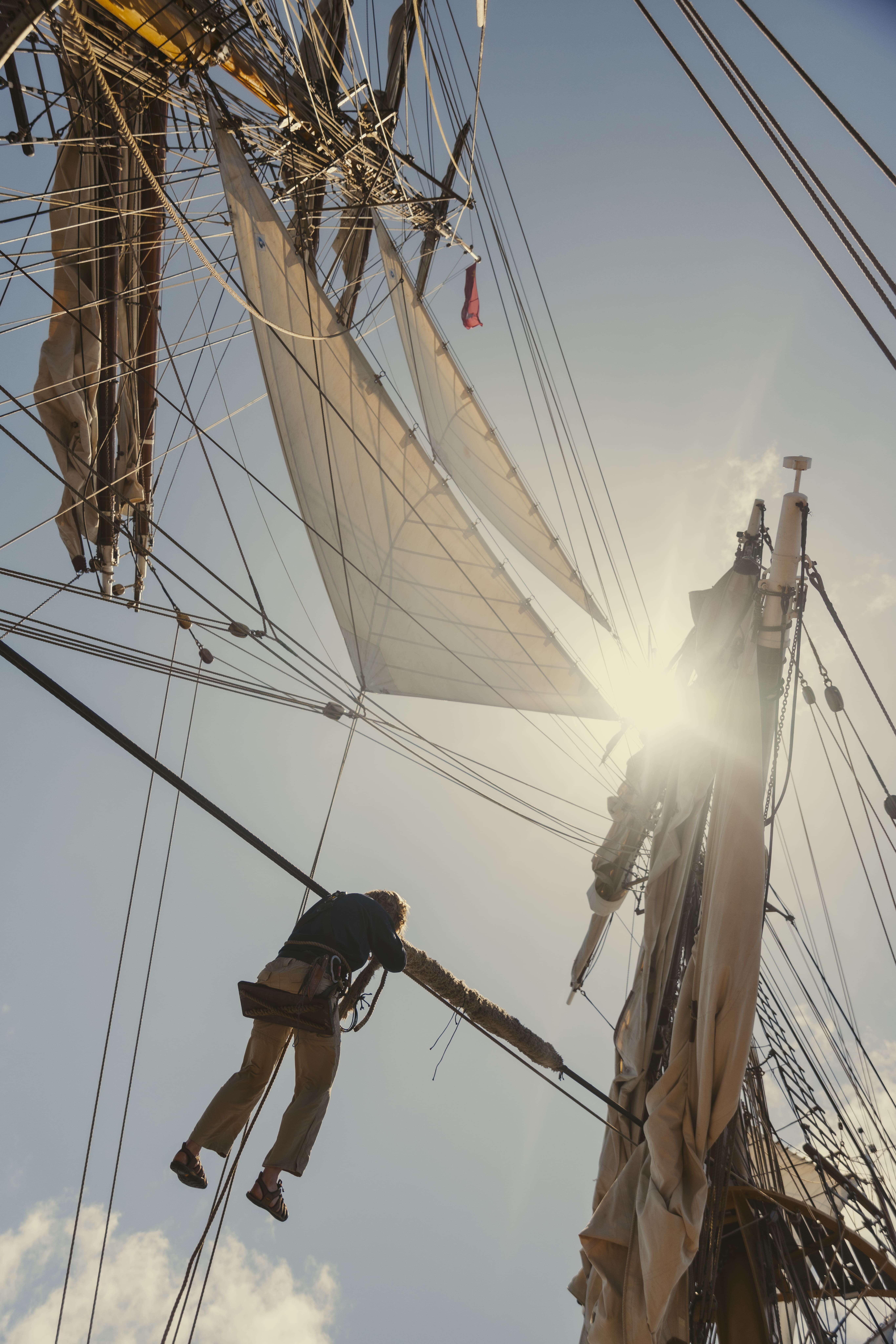
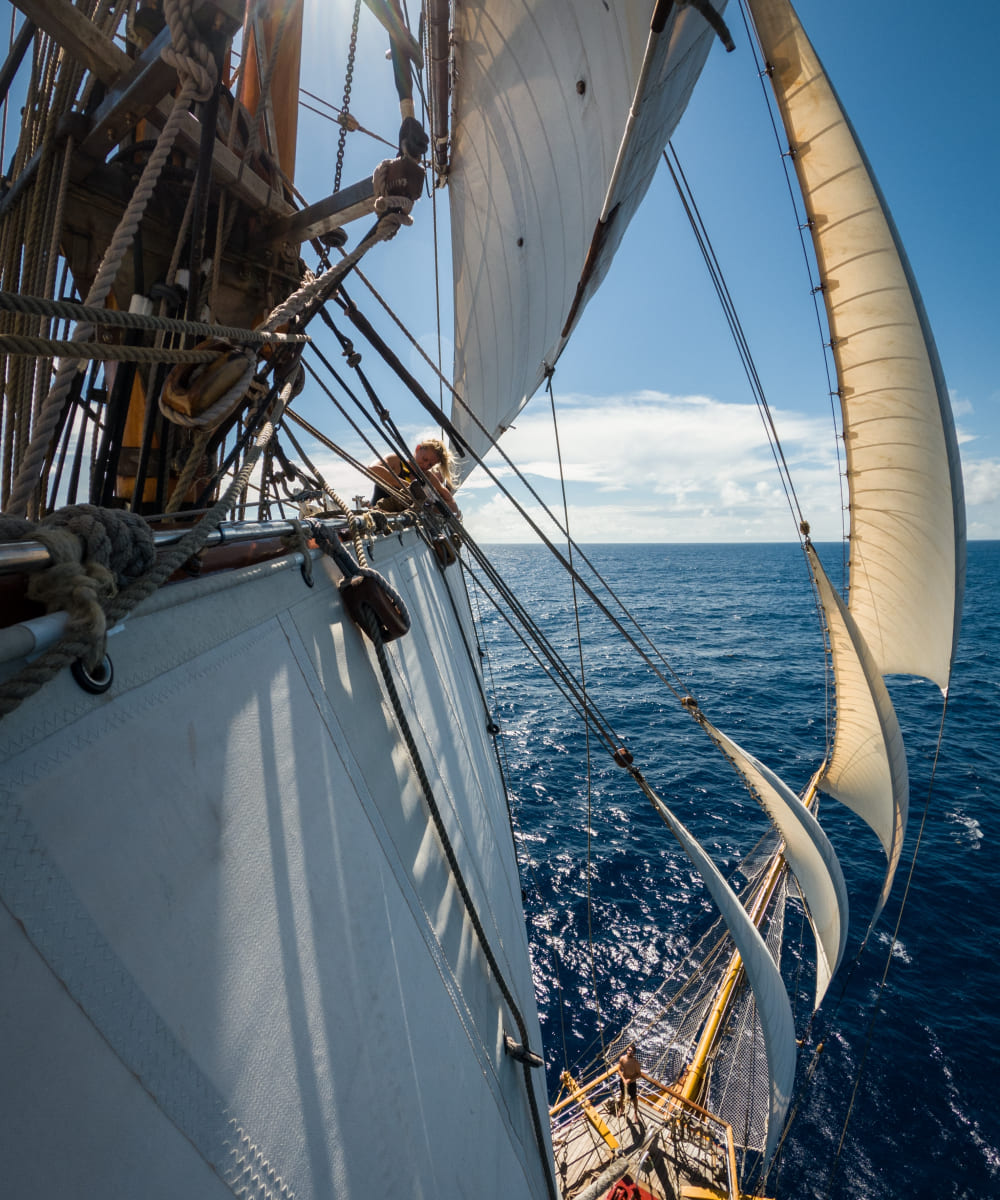
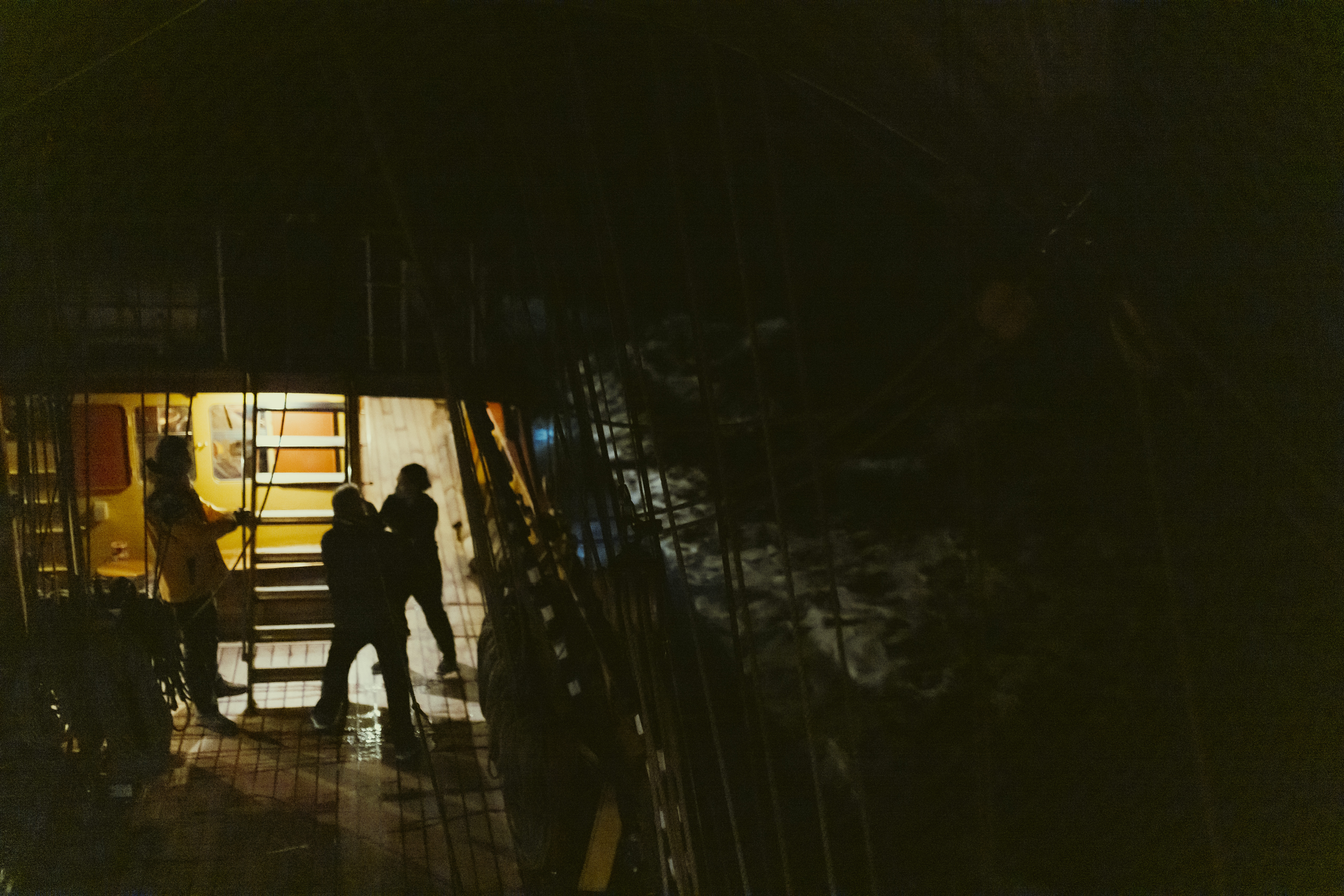
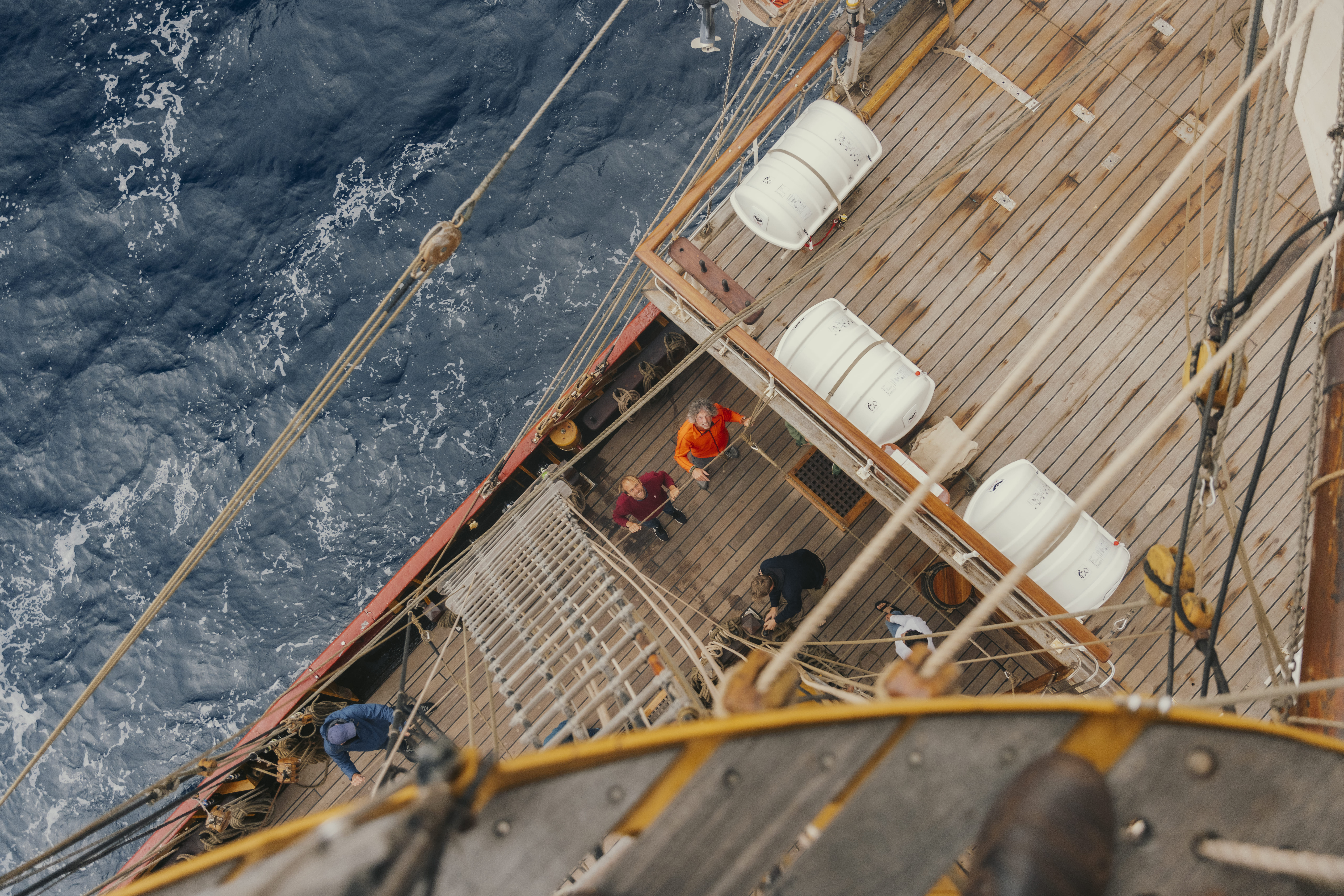
The ship operates a three-watch system — Red, White, Blue. Each watch is four hours on, eight off. During your watch you stand lookout, take the helm, and assist with sail handling alongside the permanent crew. Teamwork is what moves the ship.
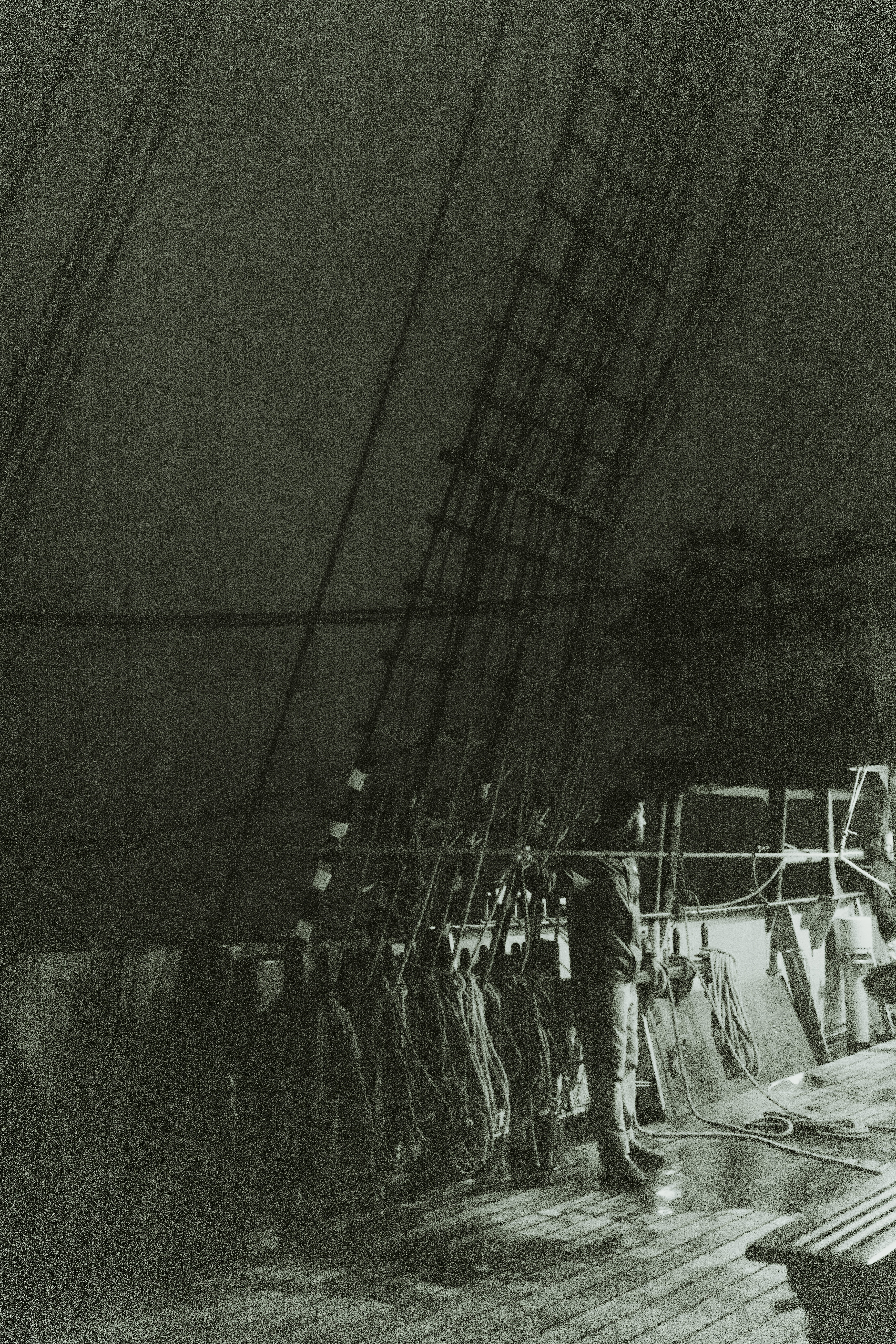
Days are shaped by weather, not by an itinerary. Sail changes happen at 03:00. Rain happens. A following wind means everything moves faster. Life on board is governed by the ocean, wind, weather, and the rhythm of the ship.
The permanent crew, officers, bosun, and deckhands, will be alongside you from the first day. Most voyage crew find themselves steering by compass, reading a sail trim, and tying a bowline in the dark before the passage ends.
This is slow travel in the most literal sense. The voyage follows the rhythm of the ship, the weather, and the sea.
The ship
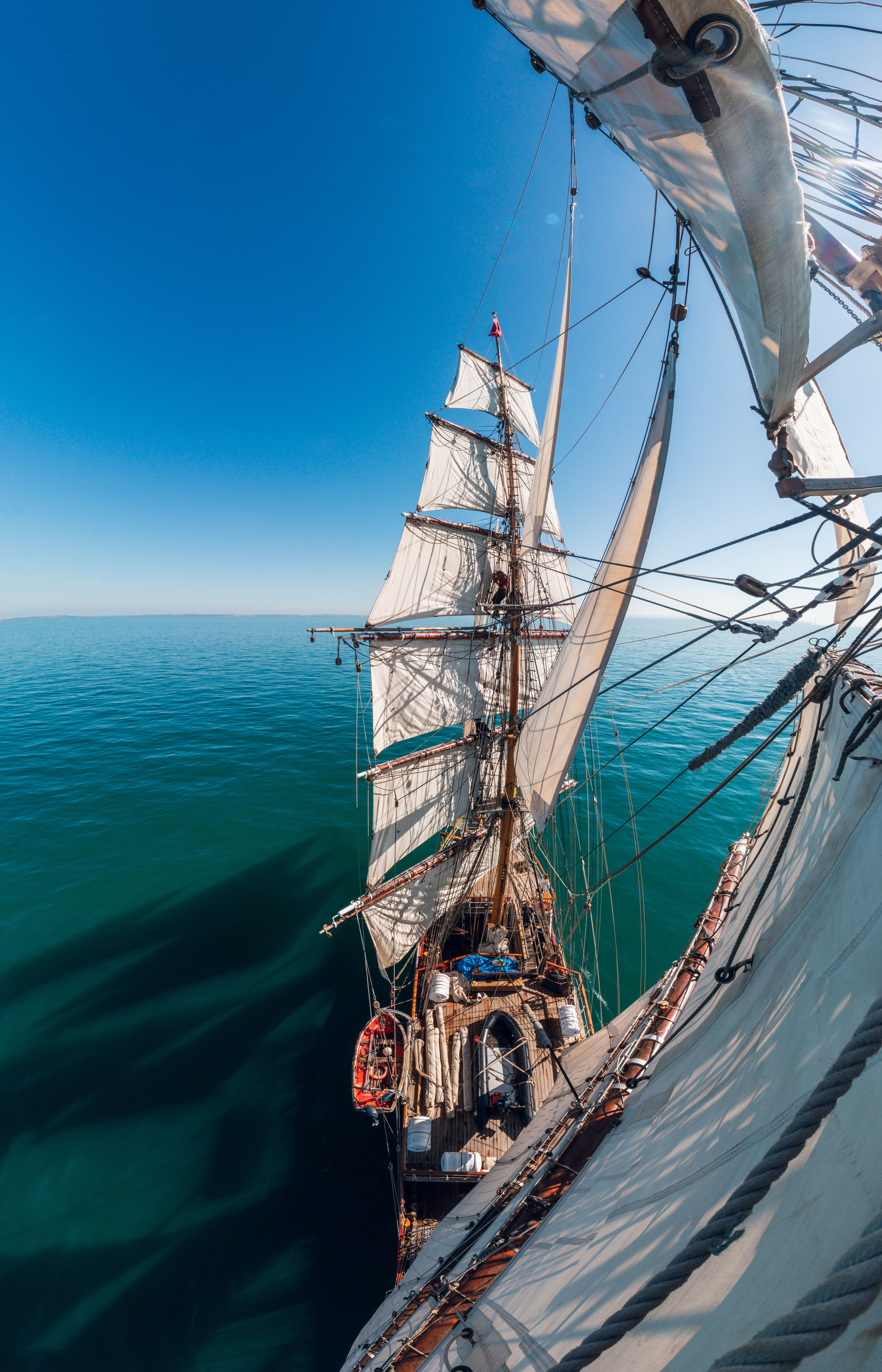
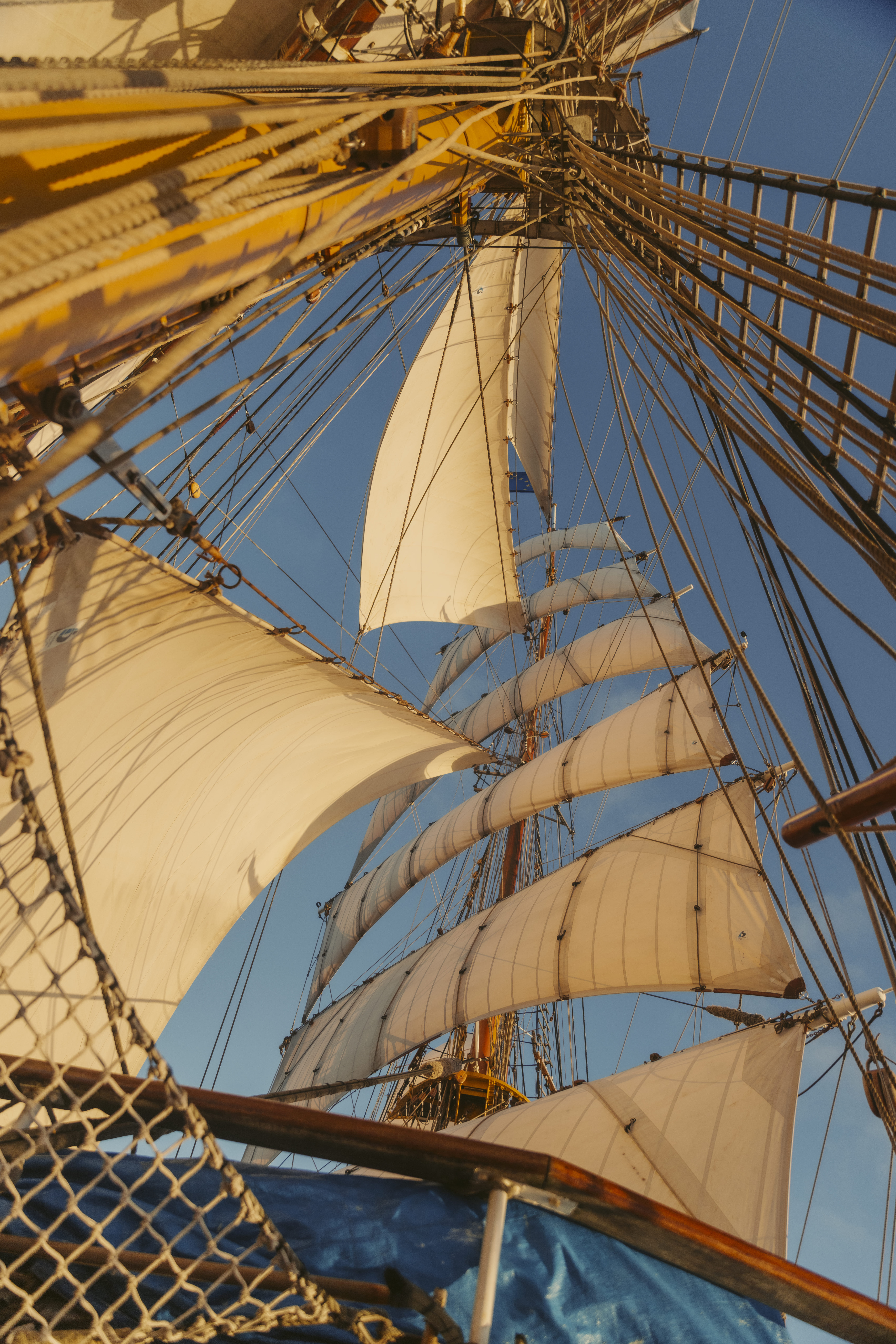
Built in 1911 as a lightship on the German river Elbe, Bark EUROPA became a sail training vessel in 1986. Since then she has sailed to all continents — the Atlantic, Pacific, and Indian Oceans, Antarctica, Polynesia. She is not a replica or a new build. She is a working tall ship with a genuine history under her keel.
The ship carries eleven cabins for voyage crew: three two-person cabins, four four-person, and four six-person. Every cabin has its own ensuite bathroom with shower and toilet. Sheets, duvets, and towels are provided.
Shared spaces include the library, the lounge, a poker corner, and the deckhouse with its small bar. Breakfast and lunch are served buffet style, dinner is served in the galley, warm, and varied. You can choose between a vegetarian and non-vegetarian diet.
The rhythm
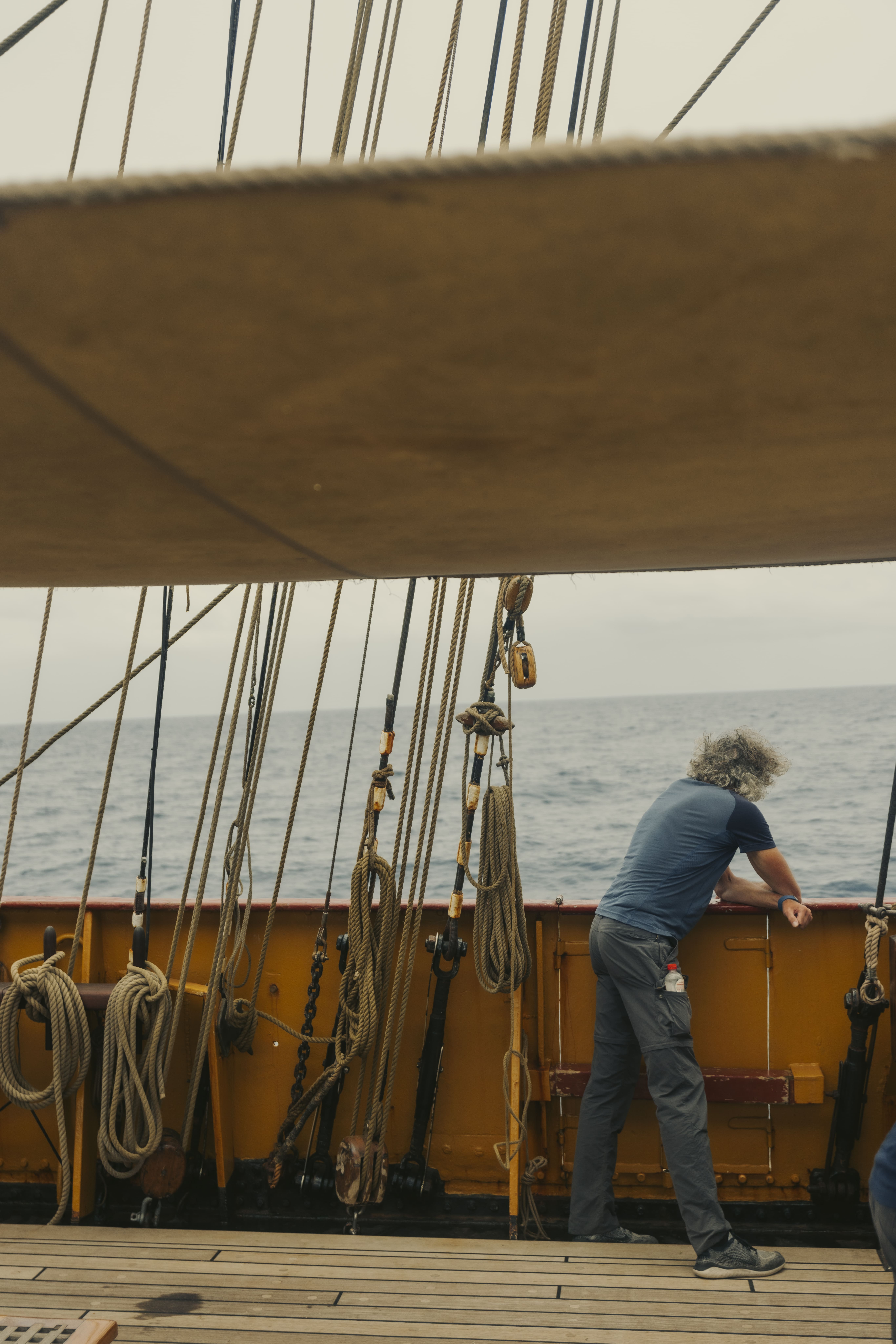
Life on board is shaped by the watch system. Four hours on, eight off. Next to your duties as voyage crew, there is also enough time to have a good rest, enjoy the scenery, read a book in the library or in the deckhouse.
The permanent crew gives lectures on navigation, sail handling, meteorology, and the places the ship is heading. These are not classroom sessions — they happen at the chart table, on deck, or in the deckhouse, often while the ship is underway.
Off-watch time is genuinely offline. No internet access is available on board. Some guests read. Some write. Some spend hours watching the horizon. The ship's library has books. The rest is shaped by the sea, the ship, and the people on board.
The Pacific is not an
empty space between islands.
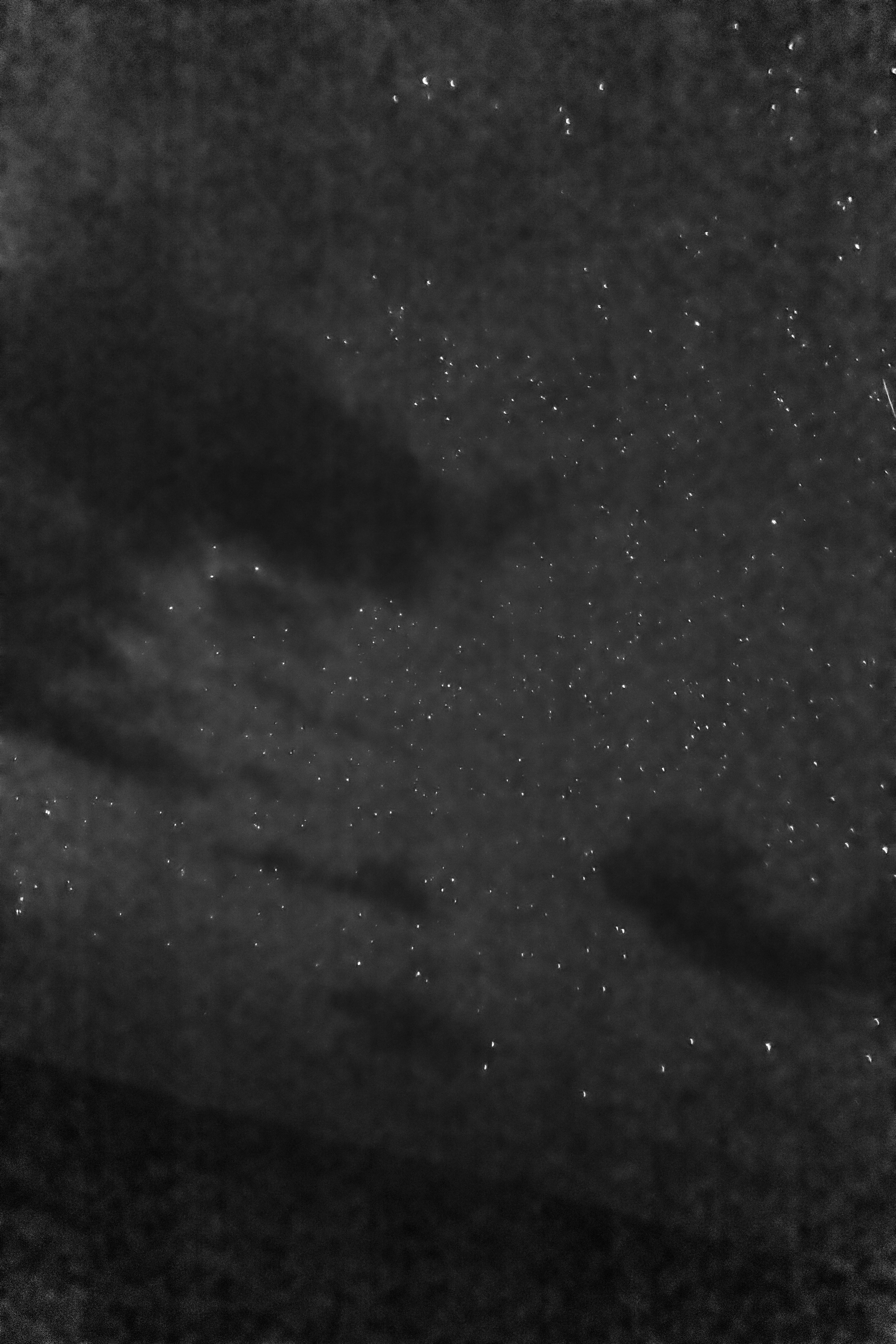
Days at sea create the voyage. The watch rotations. The meals in the deckhouse, with the sea moving beneath you. The moment you realise you have not thought about your phone in three days. The stars at night, unnervingly bright, tilting as the ship moves south.
Sail changes at midnight. Squalls moving across the horizon. Dolphins at dawn, swimming alongside the bow wave as though they belong to the ship. In the Pacific, the days are shaped less by schedule than by wind, weather, and what the ocean brings.
From the coast
of Peru to the
islands of
evolution.
Callao → Galápagos
4–21 June 2026 · 18 days
The voyage begins in Callao, the historic port city just outside Lima on Peru's Pacific coast. Here, beside working cargo berths and the smell of salt and diesel, Bark EUROPA lies moored with her three masts and the Europa flag. Lines are cast off as the city falls astern.
The first days at sea follow the Humboldt Current north, cool, nutrient-rich water that sustains abundant marine life along the coast. Dolphins may come to the bow wave. Seabirds circle the rigging. The ocean shifts gradually from grey-green to a deep cobalt as the ship crosses into equatorial waters.
After nearly two weeks at sea, the volcanic peaks of the Galápagos Islands rise from the horizon. The crossing covers approximately 1,030 nautical miles, shaped entirely by wind and weather.
A rare eastern Pacific departure.
Most ships that sail the Pacific begin in Panama or Mexico. Departing from the Pacific coast of Peru places Europa at the edge of the Humboldt-fed eastern Pacific — a region of exceptional marine productivity, shaped by the cold upwelling that feeds the Galápagos ecosystem from below.
The passage north and west covers nearly two weeks. Watch rotations begin from the first evening. By day three or four, the ship has become home — the crew familiar, the ocean less alien, the helm responsive and satisfying in your hands.
Arrival in the Galápagos marks a shift from passage to exploration. The Galápagos program begins in San Cristóbal and continues across four islands over the course of a week, with certified local guides on board throughout.
The voyage ends with disembarkation in Santa Cruz, in the heart of the archipelago.
local Galápagos guides
national park fee
landing fees
The Galápagos,
reached by sea.
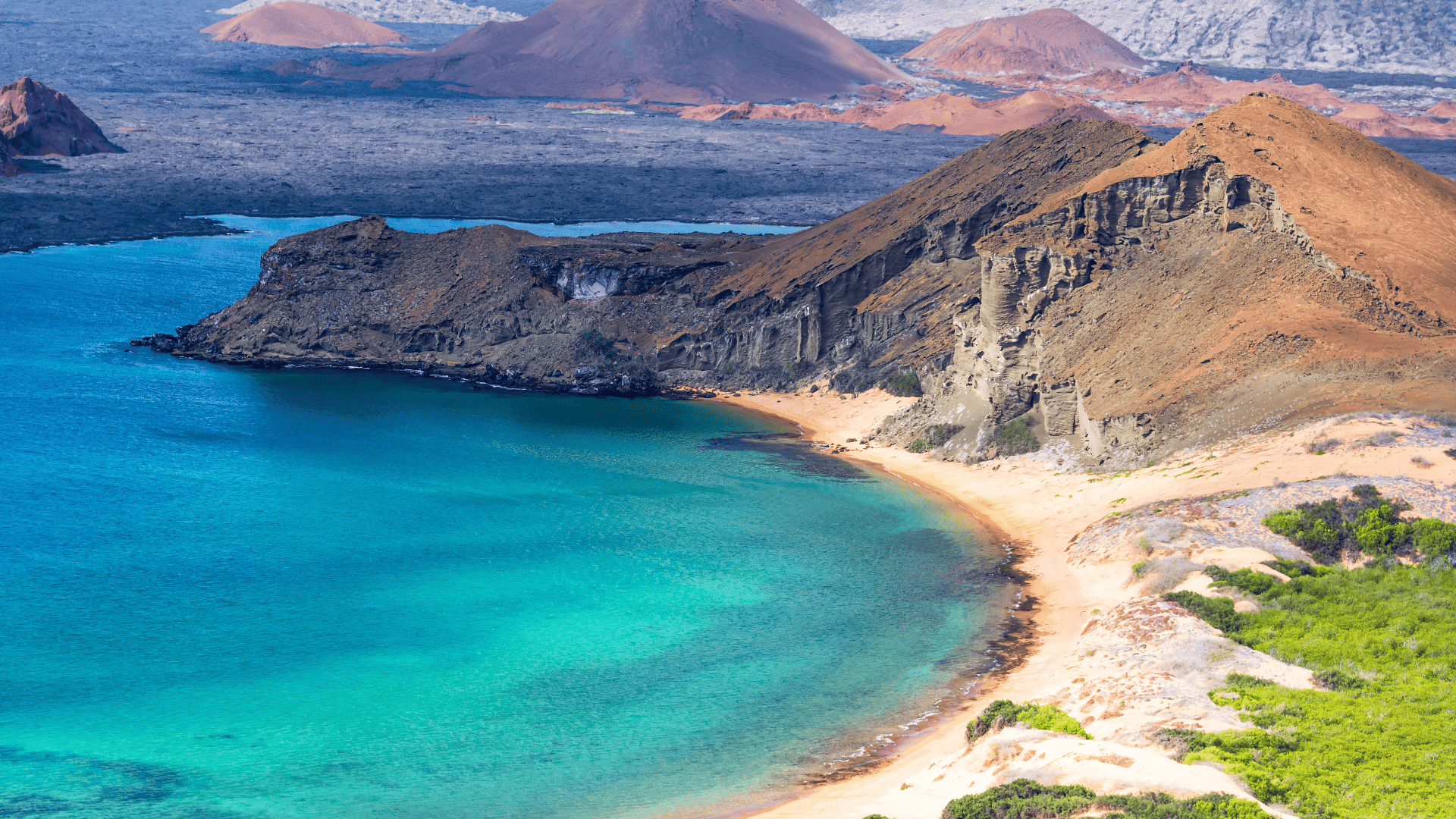
Volcanic islands rising from the eastern Pacific, roughly 1,000 kilometres west of Ecuador. They were shaped by ocean forces, isolated by currents, and left largely to their own evolution for millions of years. Arriving by sailing ship, after an ocean passage, is a different kind of arrival.
A living laboratory.
Not a zoo.
The Galápagos are a UNESCO World Heritage Site and one of the most carefully protected ecosystems on Earth. They are home to species found nowhere else, including marine iguanas, flightless cormorants, giant Galápagos tortoises, Galápagos penguins, blue-footed boobies, and more. Many of these animals have no inherited fear of humans, which gives the experience an unusual quality: not dramatic, but unnervingly quiet.
Charles Darwin visited in 1835 aboard HMS Beagle. His observations of the differences between species across the islands contributed to what became On the Origin of Species. The context is useful — not to make the visit feel academic, but to understand that you are not simply looking at unusual animals. You are looking at the result of millions of years of isolated adaptation. The guides on board will help make that visible.
Europa visits four islands — San Cristóbal, Floreana, Isabela, and Santa Cruz — over the course of a week. The program has been developed with certified local naturalists and guides, who join the ship for the full duration of the Galápagos portion of the voyage. They are not transfer guides. They are scientists and educators who live and work in the archipelago.
Each day follows a natural rhythm — some guided as a group, some flexible with optional activities. Expect a mix of shore landings, snorkelling, and time on board.
The program is part of:
- · Four islands: San Cristóbal, Floreana, Isabela, Santa Cruz
- · Certified local guides and naturalists on board
- · Shore landings and snorkelling
- · Group excursions and optional activities
- · Thoughtfully paced — not a checklist
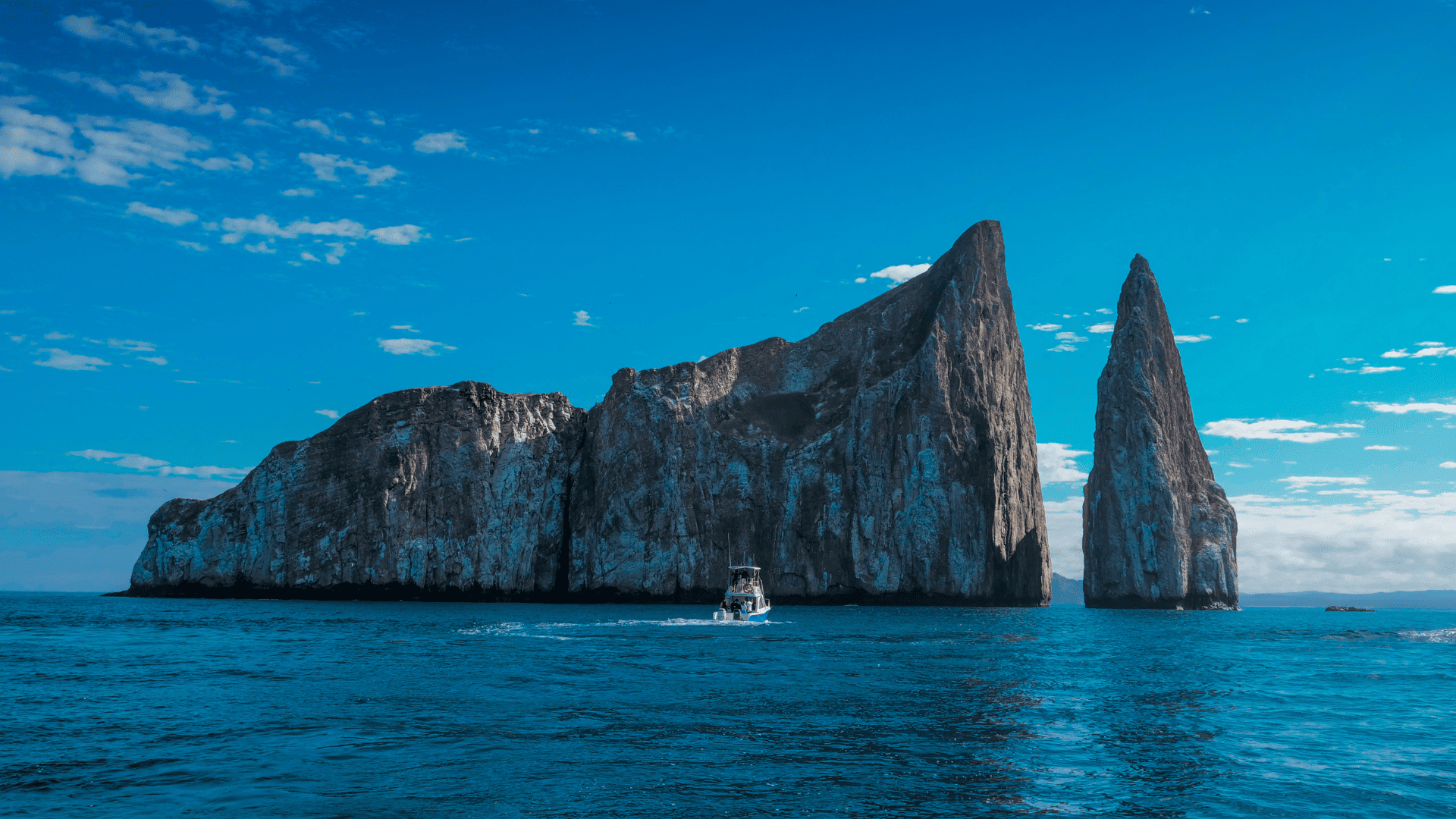
The first port of call. Home to the largest sea lion colony in the archipelago, giant tortoises, and El Junco — the only freshwater lake in the Galápagos.
Bookable activity options may include · Tortoise reserve · El Junco Lagoon · Kicker Rock snorkelling · Sea lion colony · Tijeretas pool
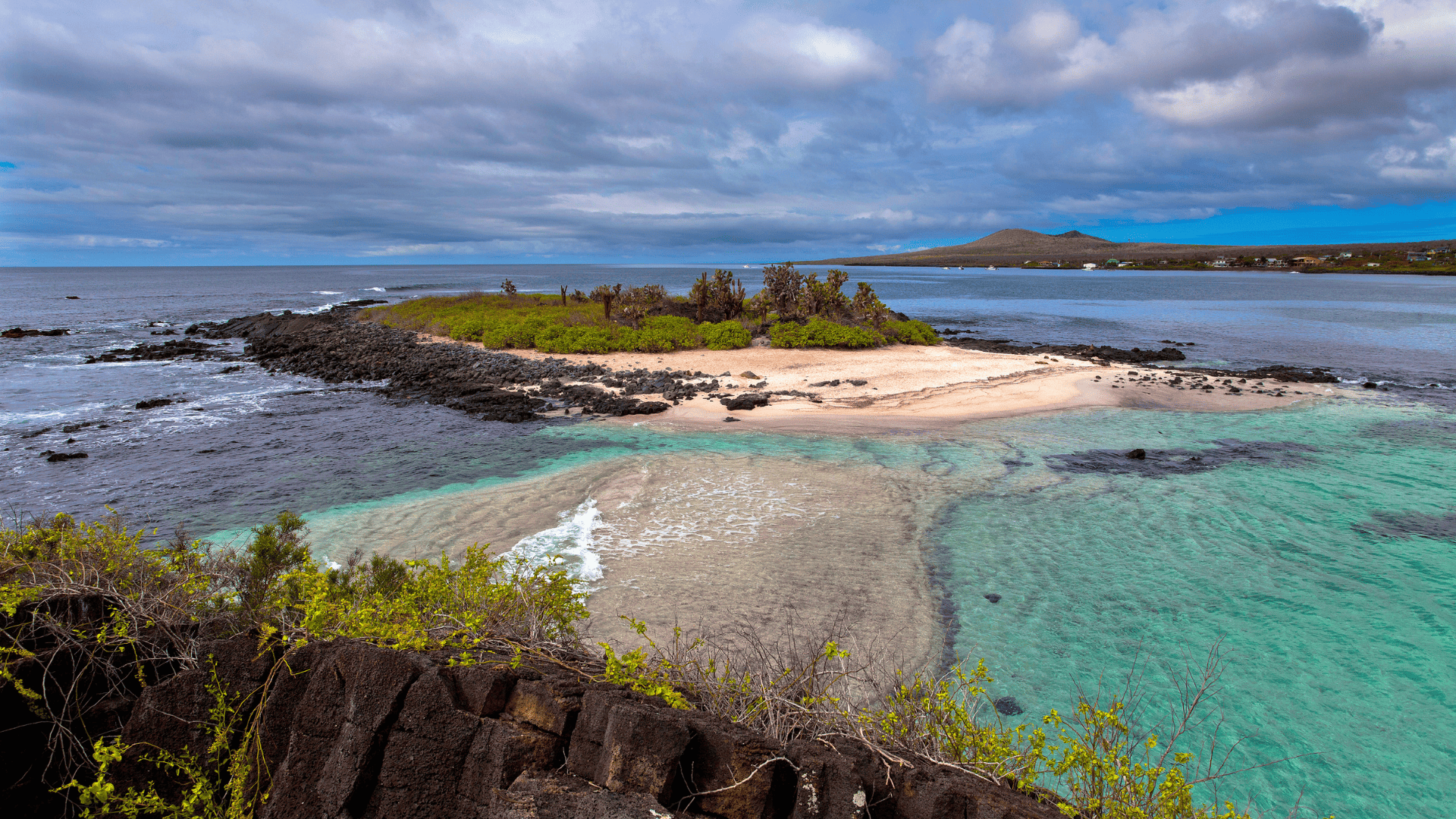
One of the smallest inhabited islands, and one of the most historically complex. Whalers, settlers, and eccentric European adventurers all left traces here.
Bookable activity options may include · Pirate caves · Giant tortoises roaming free · Local family visit · La Lobería beach snorkelling
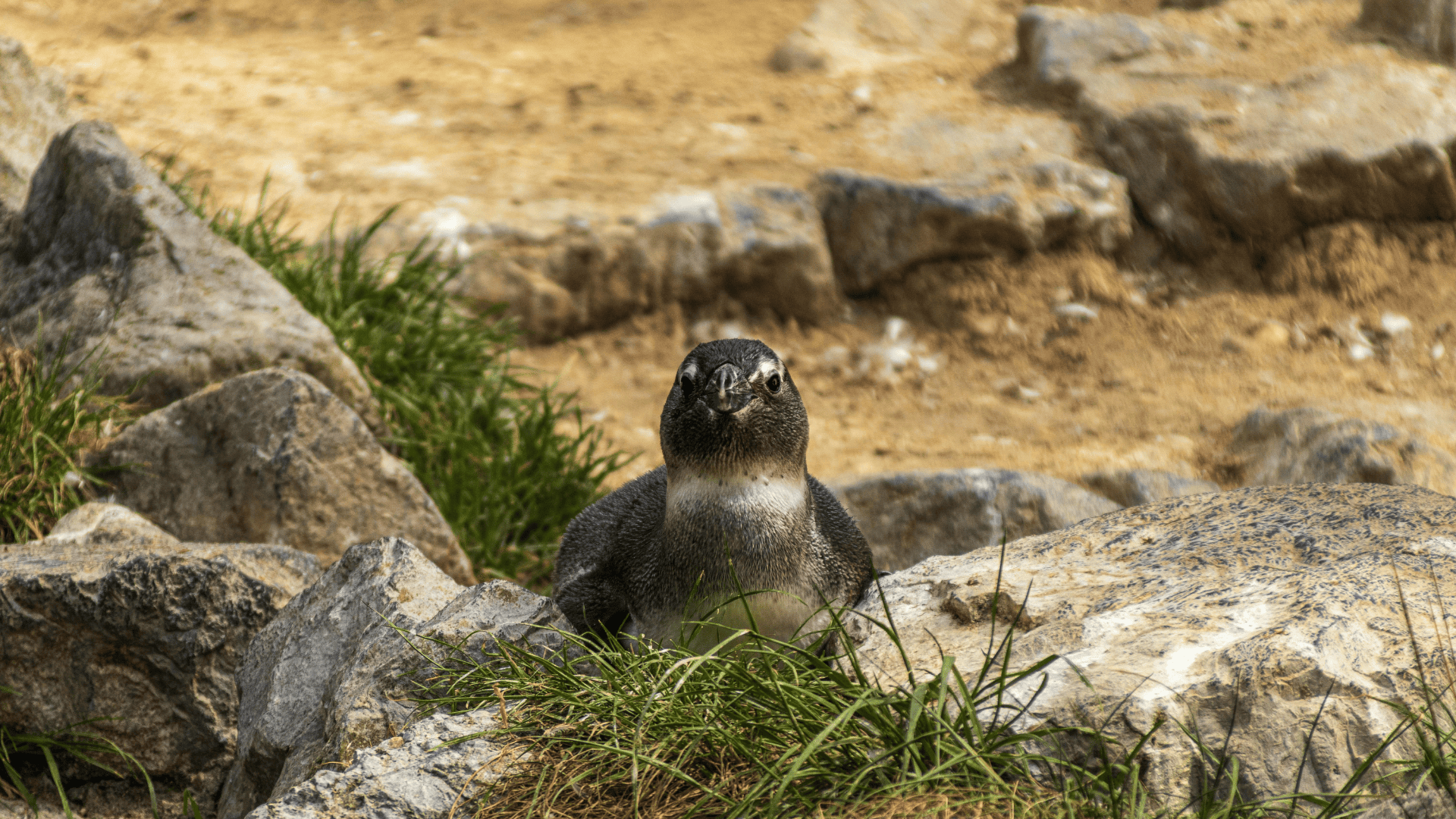
The largest and most geologically active island. Six coalescing shield volcanoes, Galápagos penguins, marine iguanas, and manta rays.
Bookable activity options may include · Sierra Negra volcano hike · Tintoreras boat tour · Los Tuneles snorkelling · Tortoise breeding centre
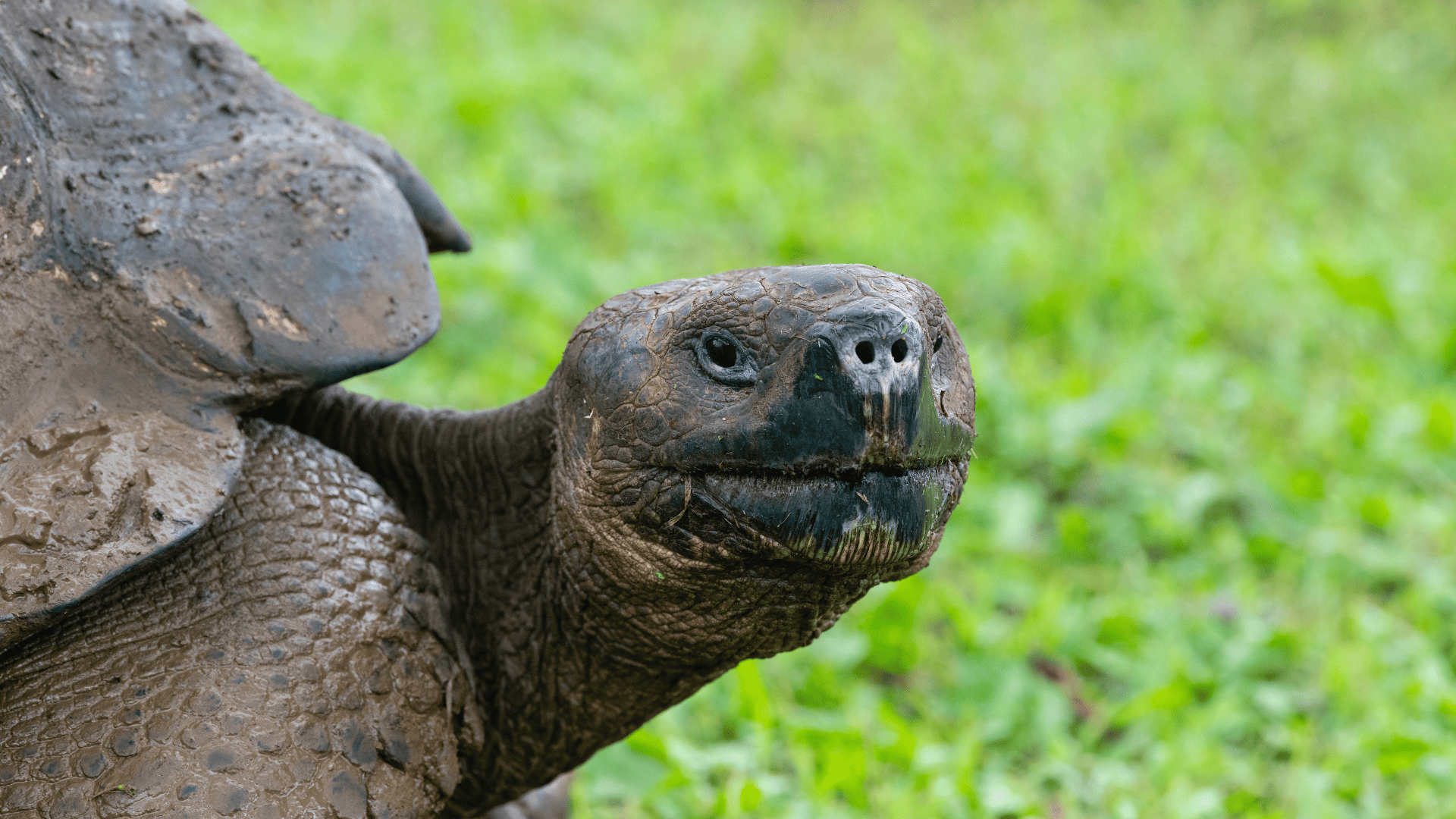
The main hub of the archipelago. Puerto Ayora waterfront, the Darwin Research Station, and highland ranches where giant tortoises roam freely.
Bookable activity options may include · Private ranch tortoise excursion · Darwin Research Station · Puerto Ayora waterfront · Day tours to Bartolomé and North Seymour
All Galápagos activities are arranged separately and subject to local regulations, national park rules, availability, and weather conditions.
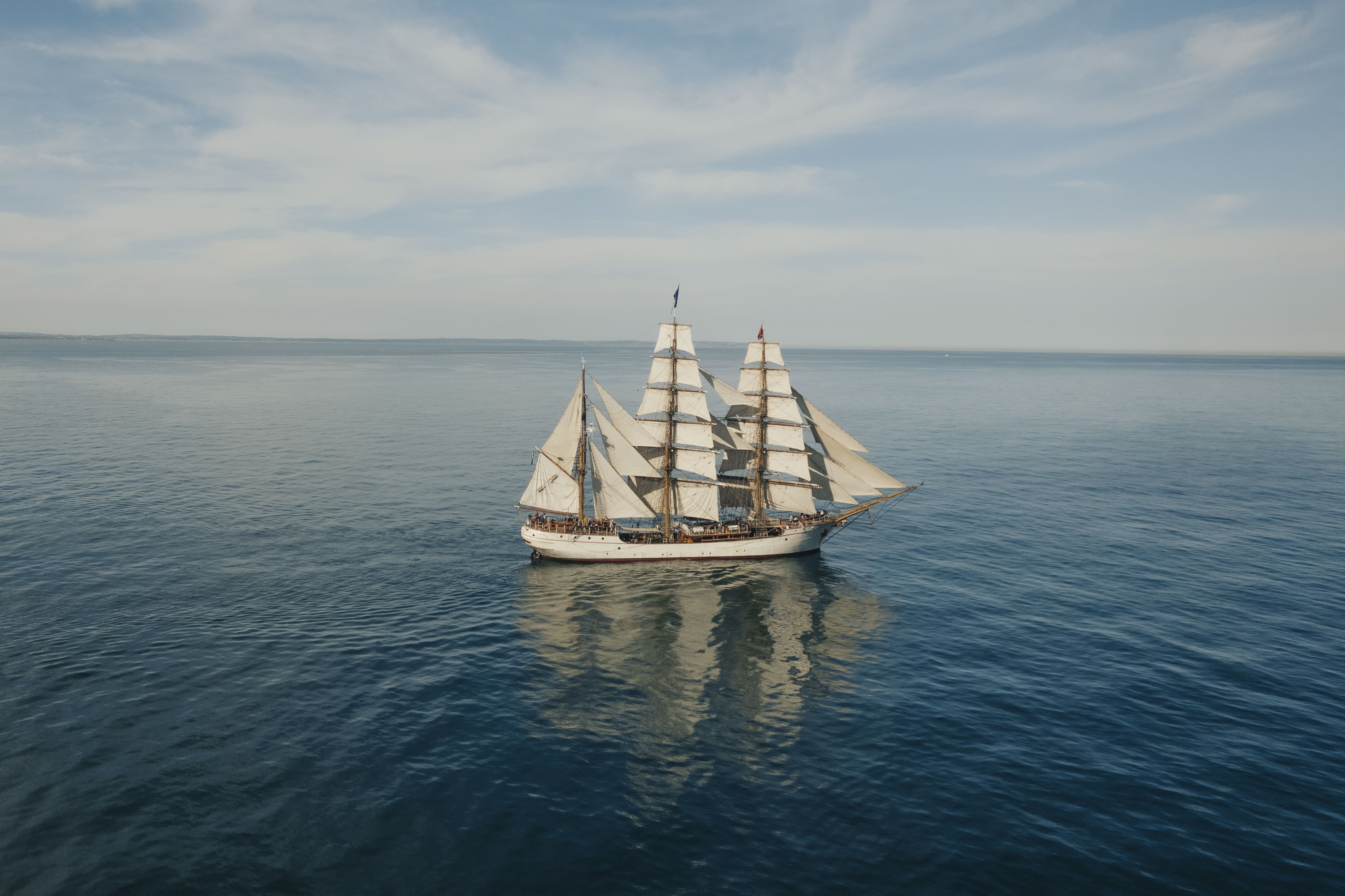
Weeks of open
ocean.
After the Galápagos, the ship leaves the islands behind and turns southwest into the open Pacific. The next landfall — if weather and conditions allow — is Easter Island. Rapa Nui. Nearly 2,000 nautical miles away.
The days settle into the watch system. The equatorial counter current influences the route in the first days. Then the southeast trades fill in — steady, reliable, and strong. The ship runs south and west, the horizon moving with her.
21 days of nothing
but ocean.
The trade winds on this passage follow a diurnal pattern: tending to strengthen around sunset, blow steadily overnight, and ease at daybreak before building again through the day. Typical sustained winds run in the range of 15 to 20 knots. The ship moves well.
Nights on this crossing are among the clearest on the planet. Far from any light pollution, the Milky Way is visible to the horizon on clear nights. The Southern Cross climbs higher each evening as the ship moves south. Members of the night watch often speak of these hours as the ones they remember most.
The open ocean has its own tempo. The ship is at sea, and the day shapes itself around that fact. Watch follows watch. Meals appear three times a day. Sails are trimmed, then trimmed again. Some days the wind holds steady for hours; some days it shifts or drops entirely. This is not a problem. It is the passage.
After approximately three weeks, the ocean changes. The swell lengthens. The air cools slightly. And then — a dark line on the horizon that slowly takes the shape of volcanic cliffs. Rapa Nui.
local guides · meals
national park fee
Rapa Nui,
earned by
ocean.
Easter Island, Rapa Nui, lies at approximately 27° south, 109° west, in the southeastern Pacific. It is one of the most remote inhabited places on Earth, with no significant landmass nearby in any direction. The island was formed by three extinct volcanoes and covers roughly 163 square kilometres. In 1995, UNESCO designated the island a World Heritage Site, with most of it protected within Rapa Nui National Park.
Between the 10th and 16th centuries, a society of Polynesian origin built shrines and erected enormous stone figures across this island in total isolation from the rest of the world. The moai, carved from volcanic tuff at the quarry of Rano Raraku, stand on ceremonial stone platforms called ahu. Around 900 moai have been documented, alongside more than 300 ahu. Nearly half remain at Rano Raraku, some finished, many left mid-carve, as though work stopped one morning and no one came back.
Almost all moai face inland, across the clan lands they were built to protect. They are not decorative. The Rapa Nui people believed the moai held the spirits of their ancestors. By raising these figures in stone, the protection and guidance of the dead could remain among the living.
Arriving after weeks
at sea changes things.
There is no view of Rapa Nui from a runway. Flying in, the island simply appears through a porthole window — there, and then landed. Arriving by sailing ship is different. The crossing covers close to 1,940 nautical miles from the Galápagos. As Rapa Nui draws near, the swell lengthens. The air changes. The island's volcanic cliffs rise from the horizon as a dark line, then slowly take shape — the crater of Terevaka, the coastal terraces, the anchorage at Hanga Roa.
Rapa Nui was first settled by Polynesian navigators who crossed this same ocean on vessels guided by stars, currents, and the flight of seabirds. Arriving under sail connects you, however distantly, to that tradition.
Key sites on the island
After disembarkation, guests may choose to spend extra time on Rapa Nui and explore sites such as Rano Raraku, Ahu Tongariki, Orongo, and Anakena with local guides.
Toward one of
the Pacific's
rarest landfalls.
From Hanga Roa, Europa turns west. The course is set roughly southwest for approximately ten days before the steep volcanic cliffs of Pitcairn Island appear on the horizon. Most ships that sail the Pacific never see Pitcairn. Very few have reason to stop.
Pitcairn rises steeply from the sea, its cliffs wrapped in mist. The island is home to fewer than fifty permanent residents. Their ancestors were the Bounty mutineers and Tahitian companions who made landfall here in 1790, burned the ship, and stayed.
A landing that is rarely
made.
If conditions allow, Europa plans to visit Pitcairn on the Easter Island to Tahiti voyage. Pitcairn's steep shores demand careful navigation and the right sea state. The island offers no sheltered anchorage. Any landing at Pitcairn depends on sea conditions, local clearance, and the practical possibilities on the day.
Reaching Pitcairn under sail, after ten days at sea from Rapa Nui, gives the arrival its proper weight. This is not a tick on a checklist. It is among the most isolated communities on Earth, and the visit — if it happens — asks for a certain kind of attention.
From Pitcairn, the route bends northwest toward the Tuamotu Archipelago. The vast eastern Pacific gives way, gradually, to the more populated waters of French Polynesia.
Fakarava or Rangiroa
Papeete, Tahiti
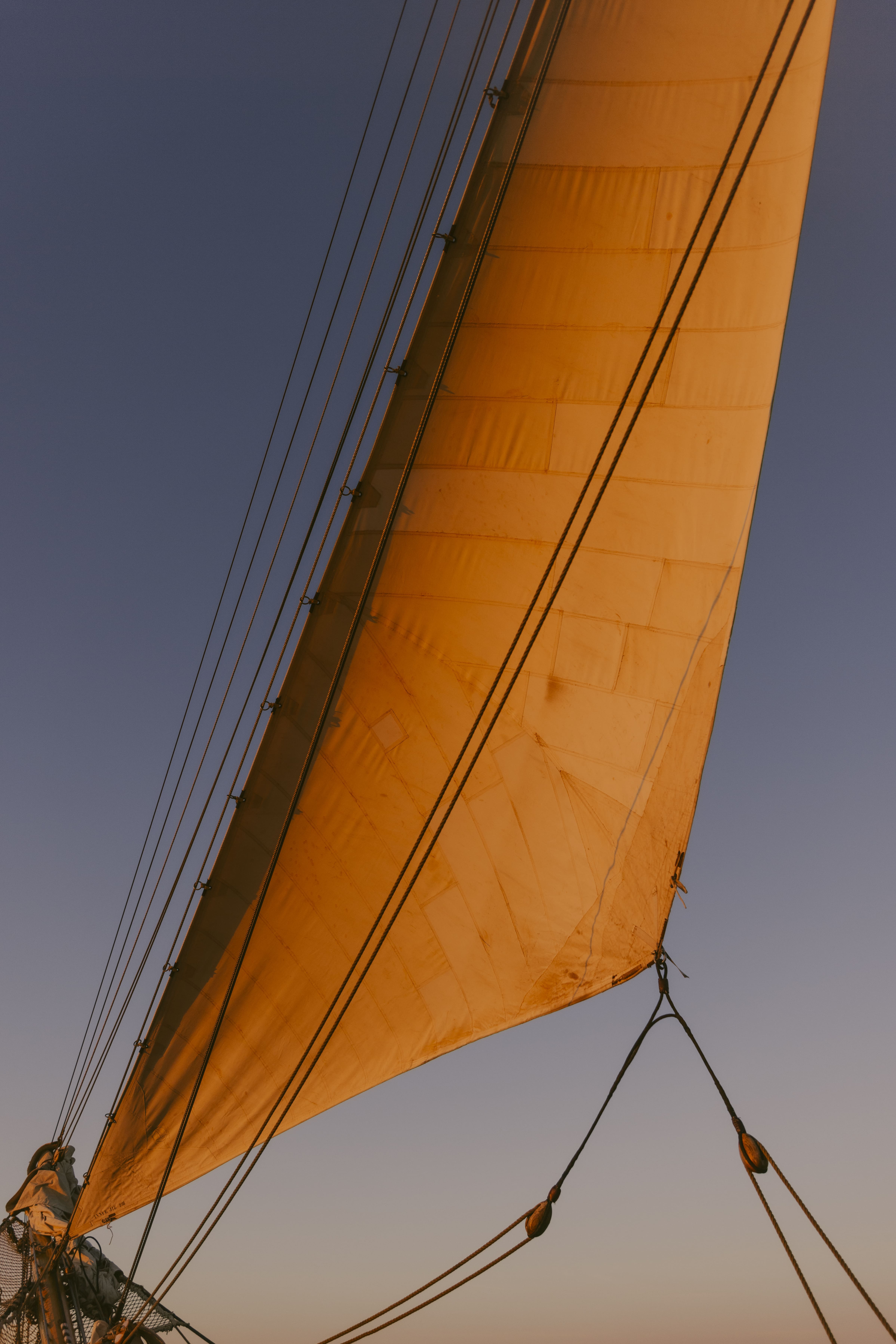
Atolls, lagoons,
and the long
approach to
French Polynesia.
The Tuamotu Archipelago is a remote chain of coral atolls scattered across the eastern Pacific — some of the most geologically low-lying land on Earth. There are no mountains, no volcanic peaks, no vertical reference. Just coral, sky, and an extraordinary quality of light over water.
Europa plans to stop at Fakarava, a UNESCO Biosphere Reserve in the central Tuamotus, as part of the Easter Island to Tahiti voyage. Entering through the pass into the lagoon requires reading the current carefully — the tidal flow through these narrow channels can be strong. Inside, the lagoon glows in shades of turquoise.
Depending on conditions and timing, a stop at Rangiroa may be considered as an alternative. Both are weather- and tide-dependent. Snorkelling inside the lagoon pass is possible when conditions allow.
From the Tuamotus, the final leg to Papeete covers a few hundred miles — the ship approaching Tahiti's distinctive volcanic outline after weeks of low coral and open ocean.
After weeks at sea,
Tahiti feels enormous.
Papeete is the capital of French Polynesia, a busy, warm, genuinely international port city backed by the extraordinary green bulk of Tahiti Nui. After weeks of open ocean, atolls, and remote island life, it arrives as something close to sensory abundance.
For those disembarking here at the end of the Easter Island to Tahiti voyage, Papeete is a gateway. From here, a vast archipelago of islands spreads west and south: Moorea, the Society Islands, the Tuamotus, and the Australs. Flights connect to the Marquesas.
For those joining for the Tahiti to Cook Islands voyage, Papeete is the starting point. The ship rests briefly. Then the sails go up again.
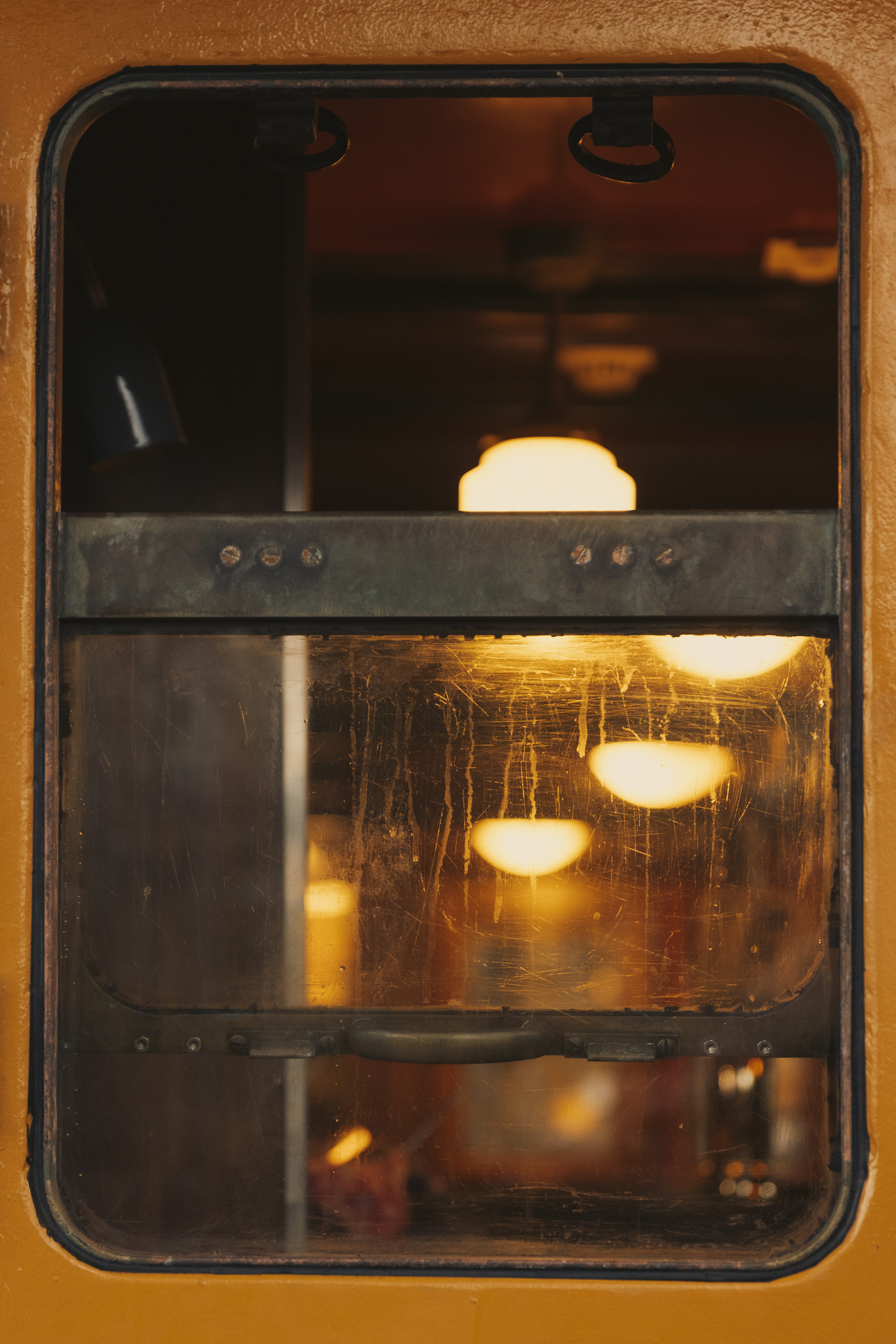
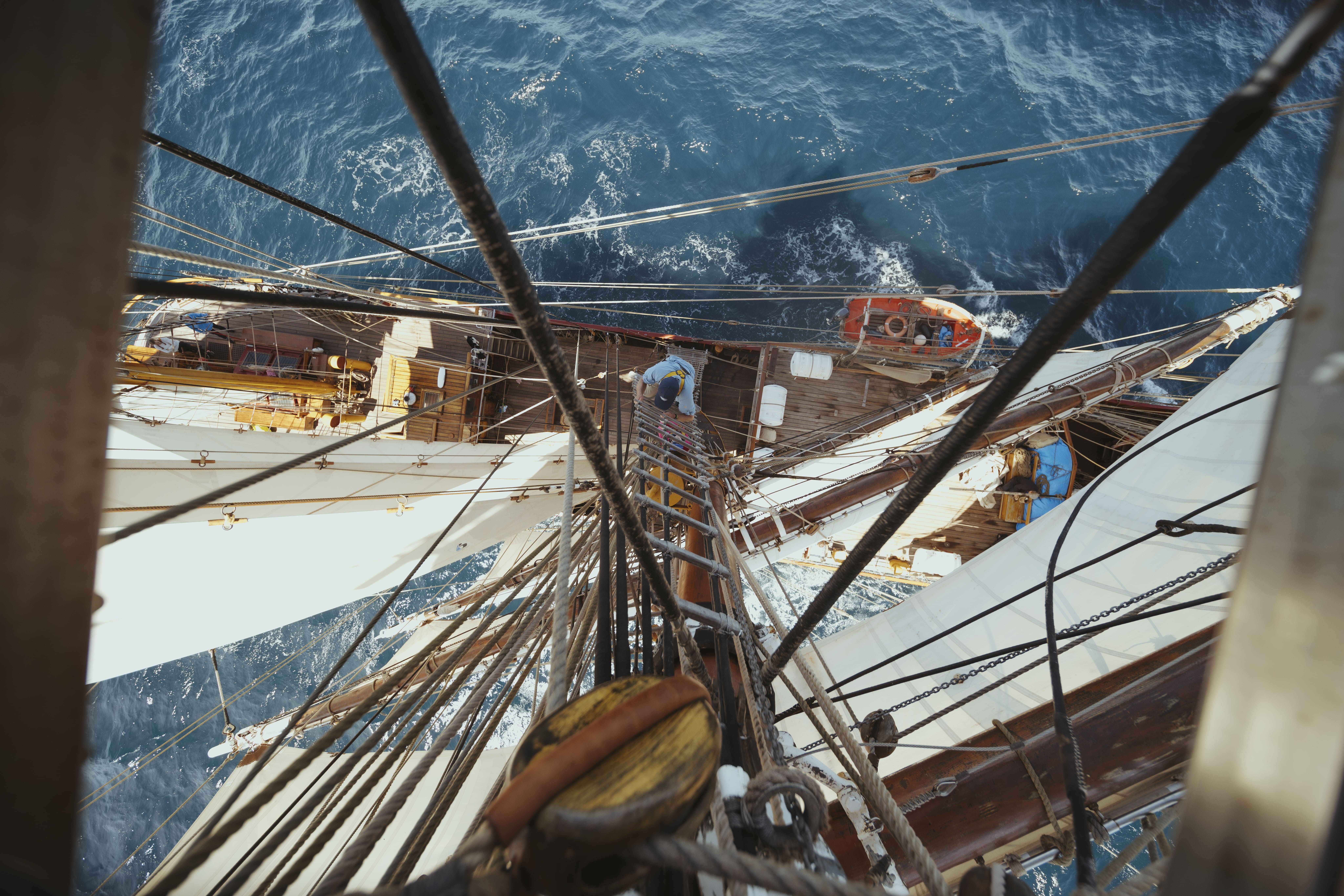
The islands arrive slowly.
That is the point.
After the open Pacific, French Polynesia is not a destination so much as a landfall — a gradual return to colour, warmth, and the smell of vegetation. The ship enters through one world and anchors in another.
From Papeete to the Society Islands
Papeete is a lively Pacific port city, where the working harbour sits close to markets, cafés, gardens, and the green mountains of Tahiti. The ship arrives here at the close of the Rapa Nui crossing, and stays for two days while crew and voyage crew recover, resupply, and explore.
The Tahiti → Cook Islands voyage departs 24 August 2026. Over the following 19 days, Bark EUROPA moves through the Society Islands under sail — Raiatea, Taha'a, and Bora Bora — before crossing west to the Cook archipelago.
The Society Islands are what people imagine the Pacific to be: volcanic peaks draped in cloud, lagoons in twenty shades of blue, outriggers cutting across the anchorage. The ship at anchor here feels earned.
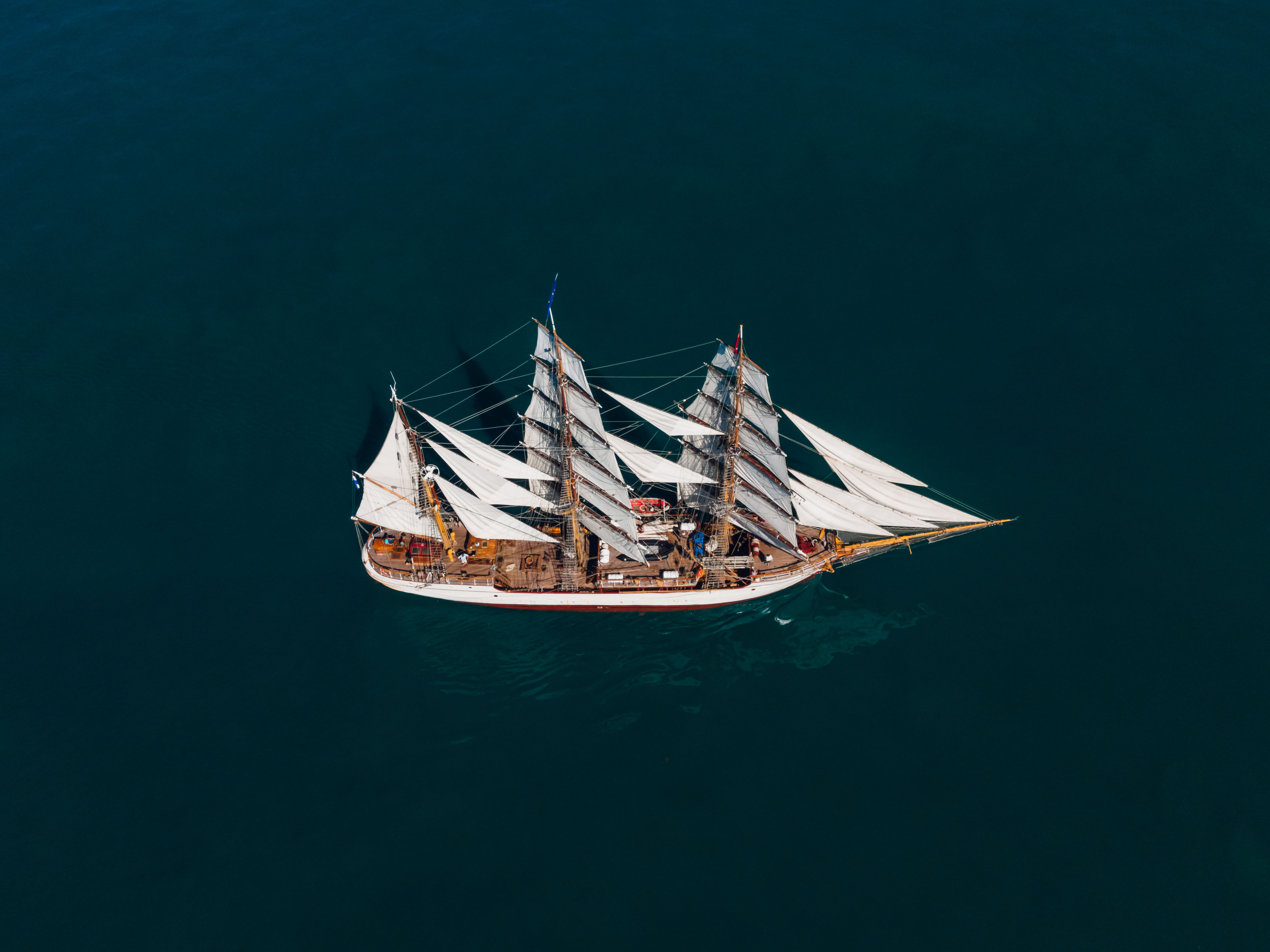
Raiatea is the spiritual heart of Polynesia — the island from which, according to tradition, all Pacific migration began. Walking the marae at Taputapuātea, a UNESCO World Heritage site, makes the Pacific feel ancient in a different way than the open ocean does.
The Cook Islands
Small, remote, remarkably varied. The Cook archipelago divides into two groups — the northern atolls, low and windswept, and the southern volcanic islands. Bark EUROPA explores the southern group: Aitutaki, Atiu, Mitiaro, Mauke, and Rarotonga.
/DSC05705.jpg)
Aitutaki
One of the most beautiful lagoons in the Pacific — a shallow expanse ringed by motu. The ship anchors outside; crew and voyage crew reach the lagoon by tender.
/DSC05751.jpg)
Atiu
Raised coral island — makatea limestone coast, inland coffee plantations, and the famous Kopeka swiftlets nesting in limestone caves. A quieter, less-visited island.
Mitiaro & Mauke
Two small, nearly flat coral islands with freshwater lakes, traditional meeting houses, and village communities that see few visiting vessels. A rare kind of quiet.
Rarotonga
Avarua is the administrative capital — small, relaxed, surrounded by reef. The Cook Islands → Auckland voyage embarks here on 13 September 2026 for the passage south to Tonga and on to New Zealand.
Days between islands
Between the islands, the trades are consistent and the ship moves well. Night watches here feel different from the open Pacific — there is always land nearby, though rarely visible. The stars are enormous.
The Cook Islands section of the voyage — from Aitutaki through the smaller islands to Rarotonga — takes roughly ten days and covers around 400 nautical miles. Anchorages are rolly in places; the smaller islands offer no marinas, only open roadsteads where the ship swings on a single anchor.
Going ashore on Atiu or Mitiaro means launching the tender and reading the swell. This is how remote islands work. It is part of the experience — not an inconvenience.
Tonga
Tonga has a distinct history as a Pacific kingdom that maintained its own monarchy and sovereignty through a period of intense colonial pressure. That history is present in the culture, the architecture, and the way people carry themselves.
Between the Cook Islands and New Zealand, EUROPA sails through a part of the South Pacific where ocean distance, weather, and landfall still matter. Tonga marks one of the great Pacific waypoints on the route south-west: a place of deep seafaring heritage, island culture, and open-ocean arrival. As always, the exact experience is shaped by weather, clearance, and conditions at the time.
Between July and October, humpback whales pass through Tongan waters. Bark EUROPA may encounter them. There are no guarantees with wildlife, but encounters have occurred in these waters before, and the possibility is real.
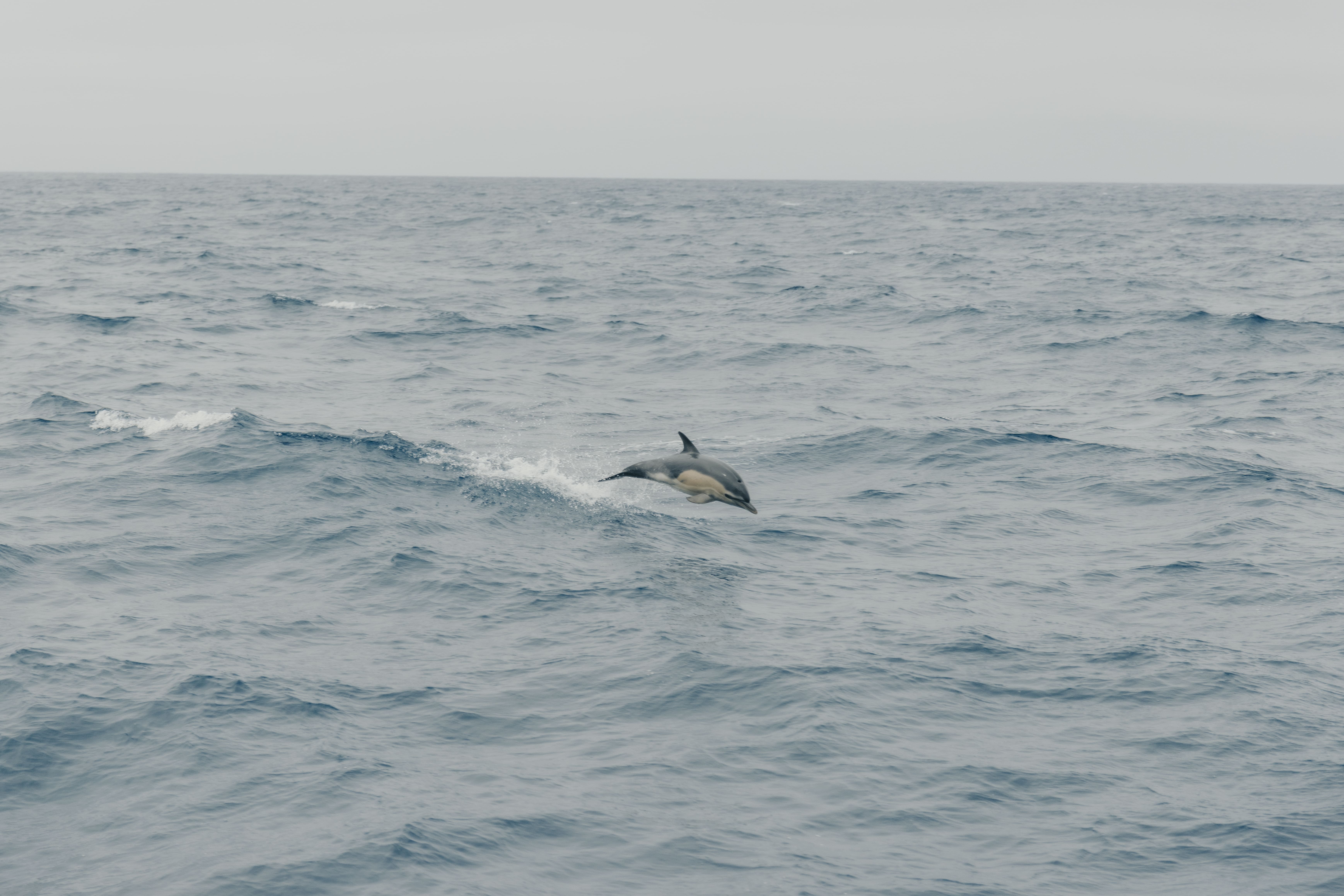
Humpback whale encounters are not guaranteed and depend on conditions and wildlife behaviour. Bark EUROPA respects all marine protected area regulations during any wildlife encounter.
South toward New Zealand
After Tonga, the ship turns south. The passage to Auckland from Tonga is roughly 1,200 nautical miles — about nine to twelve days at sea, depending on conditions. The trades give way to more variable weather as the ship descends into southern latitudes. The air changes. Sweaters come out.
This is one of the more dynamic passages of the Pacific arc — not difficult, but alive. Squalls, shifting wind, the first real swell in weeks. The ship reacts differently below 30°S. The crew notices it first.
This passage covers 1,950 nautical miles over 26 days and ends in Auckland — the natural close of the Pacific arc. For many voyage crew, this is the last point of entry before the ship continues south toward Cape Horn.
/1French Polynesia by Jan Stevens.JPG)
/Javier Gayo DJI_A3 0041 Swallows Cave.jpg)
Auckland
Auckland arrives from the north on a clear day as a low skyline above the Waitemata Harbour. The ship passes through the Hauraki Gulf — islands to port, the city gradually ahead. It is a maritime city in the clearest sense, with ferries crossing the harbour, islands on the horizon, and the Hauraki Gulf opening out beyond the port.
For Pacific voyage crew disembarking here, this is the close of a journey that began in Callao — roughly 10,000 nautical miles, four to five months, if sailed end to end. Most voyage crew will have joined for one leg. All of them will feel the weight of the distance.
Bark EUROPA stays in Auckland for approximately ten days before departing south on the Cape Horn voyage. During this time the ship is reprovisioned, the crew changes over, and there is an opportunity to explore the city and the Hauraki Gulf. For those continuing from the Pacific to Cape Horn, Auckland is the threshold — the last port before the south.
Between the voyages
Auckland is New Zealand's largest city — maritime, multicultural, built on a volcanic field between two harbours. The city's relationship with the sea is practical and present: ferries connect the CBD to Devonport, Waiheke Island, and Tiritiri Matangi across the Gulf. The water is always visible.
Ferry to Waiheke — vineyards, walking, small beaches. Ferry to Devonport — Victorian village, naval history. Sailing out of Westhaven on a Sunday morning.
Auckland War Memorial Museum — Māori collection among the finest in the world. Te Ara — The Encyclopedia of New Zealand. Summit walk on Rangitoto Island.
Those continuing to Cape Horn should prepare for cold: thermal layers, offshore-rated jacket, waterproofs. The Southern Ocean is not Auckland.
Any personal equipment, medication, or gear for the Cape Horn voyage should be acquired before departure. Resupply south of Auckland is limited. Punta Arenas is the next full port.
Auckland is the final port of call for all five Pacific voyages and the embarkation point for the Cape Horn Rounding. What follows is a different kind of sailing.
Cape Horn Voyage →/Cape Horn 2026/20Cape Horn Rounding Bark EUROPA 2026 by Jordi Plana Morales.jpg)
Cape Horn
Rounding
Auckland → Cape Horn → Ushuaia · 52 days · 5,800 nm
11 October – 1 December 2026
Beyond Auckland, the voyage changes character. The islands fall behind, the distances grow longer, and EUROPA turns toward one of the great names in sailing: Cape Horn.
This is a long non-stop ocean passage from New Zealand to Ushuaia — shaped by weather, watchkeeping, seamanship, and the Southern Ocean. For sailors, Cape Horn still carries weight.
South of everything
There are very few experiences in sailing that require no explanation. Cape Horn is one of them. The name carries a weight that doesn't need embellishment — earned over centuries by the vessels and crews who have passed this way, and those who have not.
Bark EUROPA departs Auckland in October 2026 and sails south and east — through the Tasman Sea and into the Southern Ocean. The sky flattens as the ship moves south. Seabirds appear that are rarely seen at lower latitudes.
The route follows the westerlies south and east into open ocean. Wind and swell here are not dramatic in the photographic sense. They are simply present, and large.
Rounding Cape Horn is a seamanship and weather moment as much as a navigational one. After the Horn, EUROPA continues toward the Beagle Channel and Ushuaia, where the voyage comes to its final landfall at the southern edge of South America.
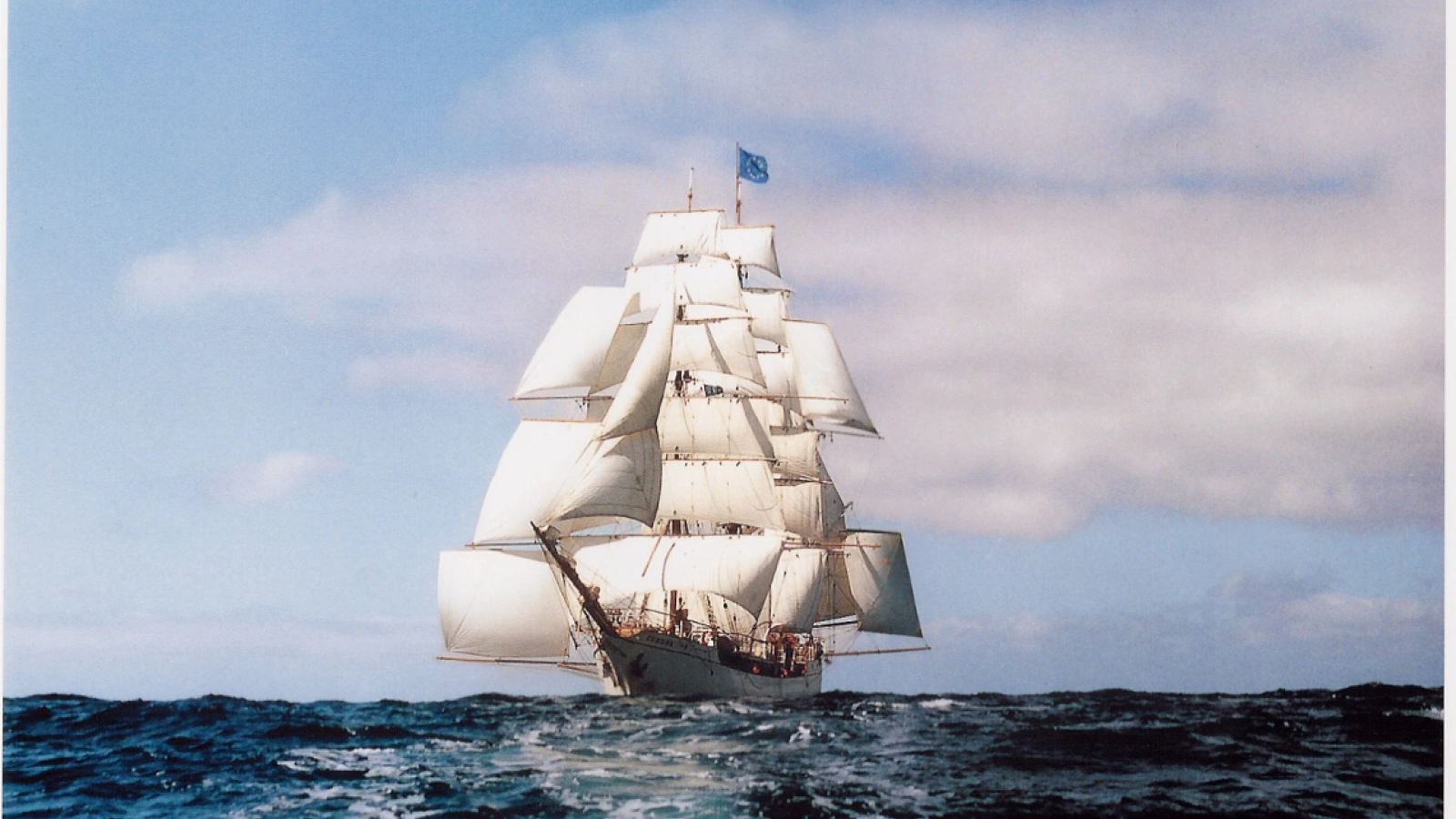
From Cape Horn to Ushuaia
After rounding Cape Horn, EUROPA continues toward the Beagle Channel and Ushuaia. The voyage is still governed by weather, visibility, and the conditions at the time, but the character of the passage begins to change. The open ocean gives way to the approach to Tierra del Fuego, with land, mountains, and sheltered water gradually returning to view.
Ushuaia marks the end of the Cape Horn Rounding and the final port of this long ocean passage from Auckland. After 52 days at sea, arrival is not simply a logistical endpoint. It is the close of a route that has crossed the South Pacific, rounded one of sailing’s great landmarks, and returned to land at the southern edge of the continent.
/Cape Horn 2026/30Cape Horn Rounding Bark EUROPA 2026 by Jordi Plana Morales.jpg)
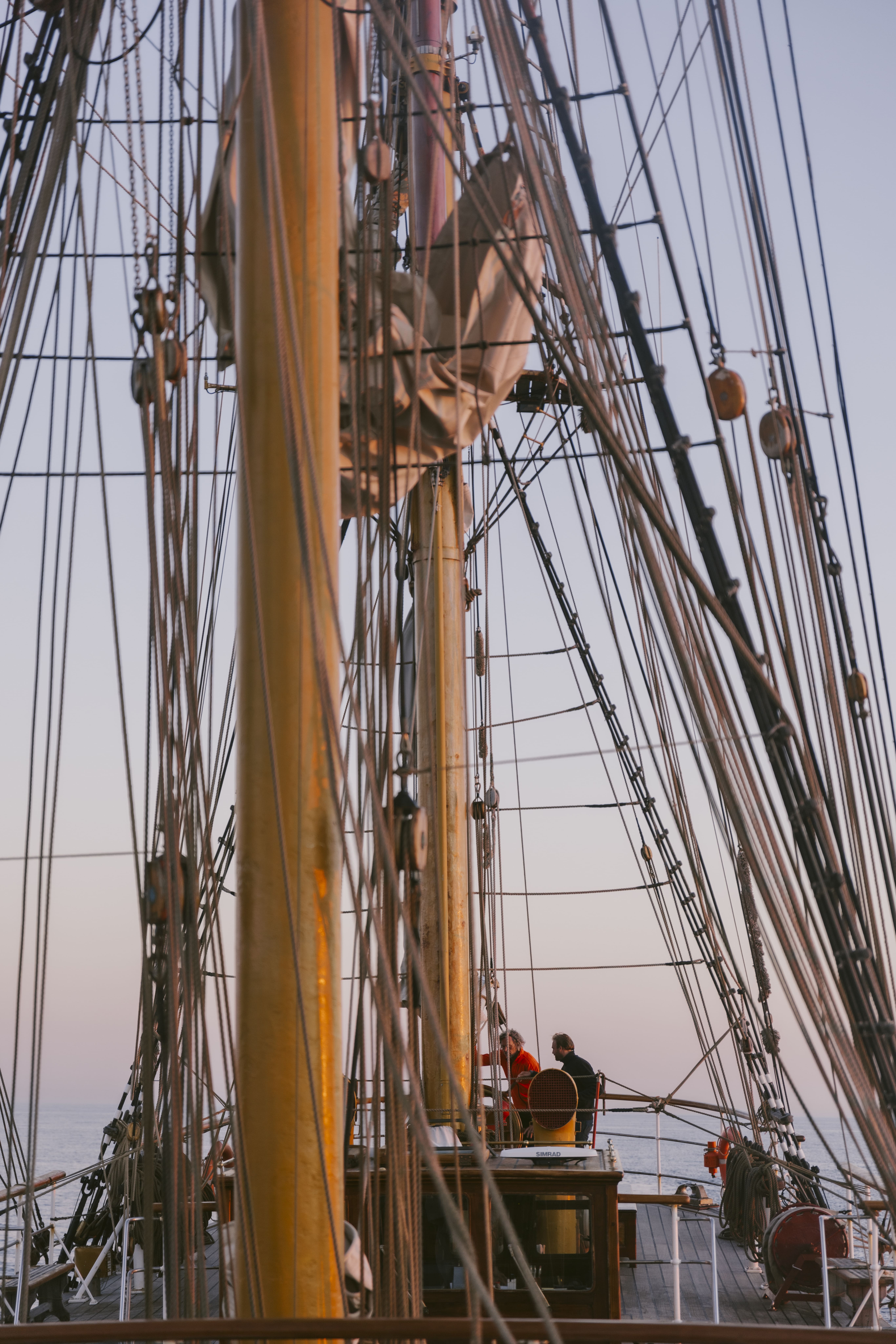
Auckland → Cape Horn → Ushuaia
Price includes all food, accommodation, and sailing training aboard. Flights to Auckland and from Ushuaia are not included. Travel insurance with offshore medical and evacuation cover is mandatory for this voyage.
Visit the voyage page at barkeuropa.com to confirm berth availability. Cape Horn attracts early interest — spaces fill.
All sailors are required to provide an additional health statement signed by their GP. The office team will confirm the exact requirements during the booking process.
After your booking request has been confirmed by the EUROPA office, you will receive the payment instructions that apply to your voyage and booking date.
Who sails with Bark EUROPA
These voyages are not designed for any particular background, age, or profession. They are designed for a particular disposition: the willingness to participate, to be useful, and to accept what the ocean gives.
NO SAILING EXPERIENCE REQUIRED
No previous sailing experience is necessary for any Pacific voyage. The ship's professional crew handles navigation, seamanship, and all technical decisions. Voyage crew are taught the ropes — literally — over the first days aboard.
By the end of a crossing, most voyage crew can steer a compass course, handle a line, and read the sails. Everyone participates in the watch system. Some sailors become deeply involved in sail handling, while others contribute through lookout, helm, and the rhythm of daily watchkeeping.
Cape Horn is the exception: it is recommended that participants have some prior offshore sailing experience. Good physical fitness is required, along with a realistic understanding of cold, wet conditions over an extended period.
WHAT TO EXPECT
Life on board is structured around the watch system. You will stand watch, four hours on and eight hours off, for the duration of the voyage. The watch system is what brings the ship from A to B, and it is also what makes the voyage feel real.
There are male and female shared cabins, all have an ensuite bathroom with shower & toilet. The shared spaces are communal and cozy. Food on board is cooked fresh each day by the ship’s cook and cook’s assistant. Breakfast and lunch are served buffet-style, and dinner is a warm shared meal after the day on deck. Life on board is simple, shared, and shaped by the watch system. The entertainment is the ocean, the rigging, and the people around you.
Many voyage crew sail alone. The social dynamic aboard tall ships is fast and real. People who share watches develop a particular closeness that comes from shared responsibility. Most voyage crew leave with friendships they do not fully explain to people who were not there.
Before you board
All participants complete a booking form before the voyage. A moderate level of physical fitness is recommended. The ship is a working vessel with uneven surfaces, ladders, and no elevator. Seasickness is common in the first days and passes for most people.
Bring any personal medication you require in sufficient quantity for the voyage. Bark EUROPA sails with a ship’s doctor, and the crew is trained to support safety at sea. Medical care on board is there to support the voyage, but it remains important to travel prepared and to discuss any relevant health considerations with the office team before booking.
If you have a condition that might affect your ability to stand watch or handle lines, discuss it with our office team before booking. You can contact us at info@barkeuropa.com.
Travel insurance with offshore medical coverage and emergency evacuation is mandatory for all voyages. Standard travel insurance is often insufficient — you need a policy that covers offshore or blue-water sailing.
Evacuation from the Pacific or Southern Ocean is not straightforward. Good insurance is not optional.
Based on tips from previous sailors, Bark EUROPA can suggest insurers with relevant offshore coverage. Contact the office team before booking for guidance.
Voyage fee includes: all meals and unlimited tea, coffee and water aboard, shared cabin accommodation, sail training, and use of the ship’s safety equipment. Flights, visas, vaccinations, alcoholic drinks, landing fees, and excursions are not included.
Pack in layers: waterproof jacket and trousers, grippy deck shoes or sturdy boots, sun hat, sunscreen, sunglasses with a strap, swimwear, toiletries, earplugs, water bottle, personal medication, seasickness tablets, and any travel documents. A detailed packing list will be shared before departure.
Cape Horn additionally: thermal base layers, warm wool mid-layers, offshore-rated foul-weather gear, high waterproof boots, waterproof gloves, thermal socks, and extra protection for head, ears, neck and hands.
Cabin storage is limited. Bring soft, foldable luggage only — no hard suitcases.
There is no Wi-Fi on board. This is offline sailing. You do have the possibility of staying in touch with friends and family using the ship’s email system.
For detailed voyage-specific preparation guides, cabin specifications, the Galápagos program, and the full terms and conditions, visit barkeuropa.com or contact the ship's office directly.
How to book
You can book your voyage directly through the website.
Browse the Pacific voyages at barkeuropa.com. Each voyage page shows current availability, full itinerary details, and pricing.
Submit a booking request or a free two-week reservation hold. The team reviews all bookings directly — you will hear back within a few working days.
Once your booking is reviewed and confirmed, you receive your booking confirmation.
With your booking confirmation, the EUROPA office provides payment instructions within your invoice. You can pay using our secure payment link.
You will be invited to the community page, where you can meet your fellow sailors and find your voyage preparation documents, including your packing list. Closer to departure, you receive your voyage ticket and joining instructions.
Some voyages may no longer fall within the standard instalment payment terms. The EUROPA office will confirm the payment timeline that applies to your booking.
The instalment schedule applies where the booking window allows. Some voyages may fall within a condensed timeline. In those cases, an adjusted schedule applies and will be confirmed by the EUROPA office.
All Pacific voyages are available at barkeuropa.com. Questions before booking? The office team is available by email.
View all voyages info@barkeuropa.com
The Pacific is not crossed in a hurry.
Some voyages stay with you because of where they take you. Others because of what the journey asks of you along the way.
Across the Pacific, EUROPA offers both: remote landfalls, long ocean passages, and the rare experience of arriving by sail.
Not as a passenger. As part of the voyage crew.
BARK EUROPA · Pacific Ocean Voyages 2026 · barkeuropa.com